• Skip to main content
  • Current
  • Home
  • About
    • About Current
    • Masthead
  • Podcasts
  • Blogs
    • The Way of Improvement Leads Home
    • The Arena
  • Reviews
  • 🔎

Changes in the Classics

Nadya Williams   |  July 27, 2021

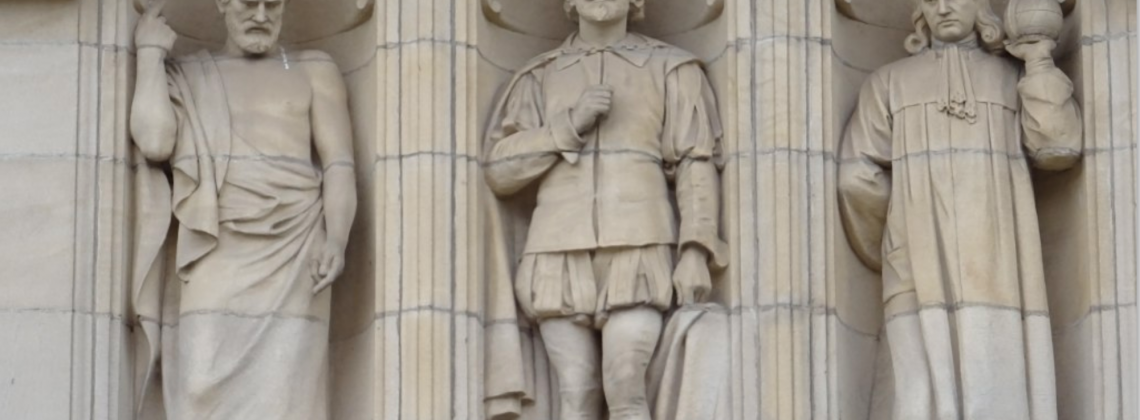
Statues of Plato, Shakespeare, and Newton above the entrance to Birmingham University – Phillip Halling/Creative Commons

Does curricular reform at Princeton warrant the conservative critique?

Princeton University’s Classics Department made national headlines this spring for its decision to add an additional track to its BA degree. While curricular reviews and changes rarely attract attention, in this case the new track proved controversial: It allows students to complete a BA in classics without taking any Ancient Greek or Latin. Responses have ranged from the positive (Could this be a way to make classics less elitist?) to the decidedly negative (This is the end of the field, or of educational integrity, or of Western Civilization.). 

What has been especially striking for me, as both an alumna of Princeton Classics (Ph.D. 2008) and as an evangelical Christian, is the uniformly negative evangelical response to Princeton’s curricular changes. Why did such organizations as the Colson Center object in their BreakPoint blog to the addition of this track? The answer, I believe, reflects a misunderstanding of what this change represents. But this misunderstanding also prevents evangelicals from advocating for educational reform that might actually be helpful for both the discipline of the classics and their own ecclesial purposes.

John Stonestreet’s foremost objections, as expressed in his article for BreakPoint, proceed as follows: “Imagine a software engineering class that doesn’t make students learn computer code. That should give you some idea how ridiculous it is that Princeton University is no longer requiring classics majors to learn Greek or Latin. Not zoology students or English majors, but classics students. You know, the folks who study Greek and Latin culture.”

These objections misunderstand the breadth of classics, and the way in which classicists conduct research. True, someone interested in doing original research in Greek and Roman literature, linguistics, epigraphy, or papyrology has to master Greek and Latin. But the analogy of software engineers learning computer code does not apply to classics and the ancient languages. As Stanford’s Walter Scheidel noted at the 2020 annual meeting of the Association of Ancient Historians, he himself has hardly had occasion to read the ancient languages over the past several years. Excellent translations of all but a few primary sources have made this largely unnecessary. And reading primary sources in translation has not stopped him from producing ground-breaking scholarship in ancient history and comparative ancient global studies. His work on the spectacular ORBIS digital mapping project has required an astonishing knowledge of ancient literature, material culture, and geography. But not languages. 

Scheidel’s honesty in shrugging off the supremacy of reading the ancient languages may seem shocking, but it reflects the reality of research and scholarship in the field. While classics PhD programs, including Princeton’s, continue to require exceptionally rigorous training in Ancient Greek and Latin of all their graduates, many students and scholars of ancient history, archaeology, art history, philosophy, and religion have been able to conduct research in their respective fields without utilizing any knowledge of the ancient languages (assuming they ever had it to begin with). I myself teach upper-level undergraduate and graduate courses in Ancient History to students with zero knowledge of Ancient Greek and Latin.

The idea of working primarily with sources in translation is nothing new or scandalous, if we think about it. English departments across the country teach World Literature in translation. Most of the faculty teaching these courses have not read the works they teach in the original languages because they did not study those languages. Likewise, no university in the U.S. requires undergraduate philosophy majors to learn, say, French and German in order to read the masters of continental philosophy in the original. Undergraduate history majors, furthermore, rarely acquire the languages of the countries whose history and culture they study. Even pastors usually do not do their Bible reading in the original languages, as I noted in response to an outraged evangelical friend-of-a-friend, who queried, “Will seminaries now drop Greek and Hebrew as well?” Seminaries usually require a single year of Ancient Greek and Hebrew, which still doesn’t equip one to read the languages without much pain, visceral suffering, and the assistance of a good dictionary. I still have my copy of Plato’s Apology, selections from which I read in the first semester of Intermediate Greek in college. It took us the entire semester to make it through about two-thirds of the Apology. Many a time homework was a single sentence. And it took hours.

There is nothing scandalous in allowing an option (it would behoove us to remember that the Princeton change is just the addition of a new option!) to complete a major in the classics that would allow someone effectively to major in ancient history, philosophy, and archaeology—just as there is nothing scandalous in requiring pastors to take only one or two years of Greek or Hebrew. After all, they have other skills to master as well. This reality dismantles the concerns of such critics as Circe Institute’s Austin Hoffman, whom Stonestreet quotes in his own article: “We have cut ourselves off from the past and the wisdom which it has to offer us.” I will take the liberty of assuming that neither Hoffman nor Stonestreet spends their evenings reading Homer or Plato or Augustine in the original. Princeton students will continue reading the Greco-Roman classics in translation, and the level of connection to the past and its wisdom that they experience will remain unchanged. 

But the other part of Stonestreet’s criticism, which joins a chorus of other similar critiques, has to do with the expressed motivation of the Princeton Classics faculty to attract a more diverse student population. It is true that classics has historically struggled to attract a diverse student body. This lack of diversity in the pipeline has also meant a lack of diversity among professional classicists. But I struggle to understand how a concern with attracting more diversity into the field amounts to buying into the “cancel culture.” If we desire to make the wisdom of the past available to all, should we not want these changes to occur? What better way to make the wisdom of the past more widely available to new generations of students than to emphasize to all that they are welcome to be classics majors, even if they have never studied Ancient Greek or Latin? 

So, what kind of educational reforms should evangelicals champion? I would like to point out the surprising absence of classics programs at most evangelical colleges and universities, and the gradual phasing out of increasingly more classics programs at colleges and universities across the country. The absence of classics programs means not only a lack of access to the ancient languages for undergraduate students at these institutions, but (more importantly!) the lack of opportunity to study in depth, beyond the introductory Western Civilization courses, the history and culture of the world in which Jesus lived, preached, and converted the earliest believers. The earliest Christians were residents of the Roman Empire, and it is through the understanding of their cultural milieu that we may better understand the miracle of their conversion, and the counter-cultural nature of the movement of which they were part. Christians today will find it more productive to advocate for more classical civilization courses in college curricula—instead of worrying that ten fewer classicists per year may graduate from Princeton without the knowledge of Greek and Latin.

Nadya Williams is Professor of Ancient History at the University of West Georgia.

Nadya Williams
+ postsBio

Nadya Williams is the author of Cultural Christians in the Early Church (Zondervan Academic, 2023), Mothers, Children, and the Body Politic: Ancient Christianity and the Recovery of Human Dignity (forthcoming, IVP Academic, 2024), and Christians Reading Pagans (forthcoming, Zondervan Academic, 2025). She is Managing Editor for Current, where she also edits The Arena blog, and Contributing Editor for Providence Magazine and Front Porch Republic.

  • Nadya Williams
    Where to read Current contributing writers and Arena regulars after today
  • Nadya Williams
    Writing for the Public Good in a Democracy in Crisis
  • Nadya Williams
    INTERVIEW: Christopher Shannon on Irish Music in Rochester
  • Nadya Williams
    Victoria Amelina’s final book: Looking at Women, Looking at War
  • Nadya Williams
    The academic journal Ohio History has ceased publication
  • Nadya Williams
    Sing Tenderly to the Winter Woods
  • Nadya Williams
    Glorious ruins: on fragility of magazines and other institutions
  • Nadya Williams
    Blessing of Unicorns: Looking back, part I
  • Nadya Williams
    A Symposium on Love
  • Nadya Williams
    ICE raids on churches–my thoughts in Christianity Today
  • Nadya Williams
    Does listening to audio books count as “reading”? A roundup of views
  • Nadya Williams
    Interview: Anne Perez on Understanding Zionism
  • Nadya Williams
    Interview: Thomas S. Kidd on ‘Christian History: From the Reformation to the Present’
  • Nadya Williams
    Interview: Jesse Covington, Bryan T. McGraw, and Micah Watson on Hopeful Realism
  • Nadya Williams
    Current winter books week is here!
  • Nadya Williams
    Blessing of Unicorns: the antisocial century, the airport piano tuner, the only Jewish resident in Oświęcim, and more
  • Nadya Williams
    Christians Reading Classics is coming this fall–and a brief Arena break this week
  • Nadya Williams
    Blessing of Unicorns: Elon’s salute, childlessness, free press, hopeful realism, Odesa, opera, and CA fires
  • Nadya Williams
    Kids at the inauguration and in other public spaces
  • Nadya Williams
    Today is 52nd anniversary of Roe v. Wade: my reflections in Mere Orthodoxy
  • Nadya Williams
    The centenary of Lenin’s death–plus one
  • Nadya Williams
    Blessing of Unicorns: Snow, secularist violence, winter poetry, Commonplace launch, and the love of family reading
  • Nadya Williams
    Roundup: reviews of Musa al-Gharbi’s ‘We Have Never Been Woke’
  • Nadya Williams
    Blessing of Unicorns: home, neighborhood, AI, and more
  • Nadya Williams
    Right coding: who owns Homer anyway?
  • Nadya Williams
    Enrollment is up for 1 in 5 evangelical colleges and universities: Christianity Today’s report last week
  • Nadya Williams
    Blessing of Unicorns: the first of 2025!
  • Nadya Williams
    Ideas in Progress interview: Agnes Howard on family history and the experiences of everyday life
  • Nadya Williams
    Why, hello there, 2025!
  • Nadya Williams
    The story of 2024 in Current features
  • Nadya Williams
    My children’s favorite book of 2024 is…
  • Nadya Williams
    Interview: Robert Edwards on John Chrysostom’s Consolation to Stagirius
  • Nadya Williams
    Our favorite essays of 2024 from other little magazines
  • Nadya Williams
    Some of our favorite things II: Current writers and editors reflect on 2024
  • Nadya Williams
    Interview: Timothy Larsen on Twelve Classic Christmas Stories
  • Nadya Williams
    Interview: David Anthony Basham on Paul, the Temple, and Building a Metaphor
  • Nadya Williams
    “The After Virtue cabinet”
  • Nadya Williams
    2024 in 25 Current book reviews
  • Nadya Williams
    Blessing of Unicorns: education, hope, Gladiator II, and homemakers
  • Nadya Williams
    Julie Durbin invites students to “A Way of Pilgrimage in the World.”
  • Nadya Williams
    No, accreditation requirements won’t save the humanities
  • Nadya Williams
    Interview: John McCabe on Dietrich Bonhoeffer–The Last Eight Days
  • Nadya Williams
    Thanksgiving with Harold and the Purple Crayon
  • Nadya Williams
    Current writer and novelist, Fred Durbin, featured in USA Today
  • Nadya Williams
    Blessing of Unicorns: Putin bearing gifts, AI and seeking truth, J.D. Vance’s mom, and books
  • Nadya Williams
    A new era for humanities and social science PhD programs?
  • Nadya Williams
    Blessing of Unicorns: Monkeys on the loose, a lesser-known Inkling, Davy Crockett, and more
  • Nadya Williams
    Footnotes!
  • Nadya Williams
    “60 Minutes” investigates “mysterious Russian death syndrome”
  • Nadya Williams
    FORUM: Election 2024
  • Nadya Williams
    Blessing of Unicorns: Python hunters, writer-welder, Chesterton, and swapping babies (but you get ‘em back)
  • Nadya Williams
    Post-election reading list: books to encourage and discourage
  • Nadya Williams
    Good citizens under a bad emperor
  • Nadya Williams
    Interview: Chris Gehrz, College for Christians
  • Nadya Williams
    If you need a non-political read this weekend: “The Novel and the Dictator”
  • Nadya Williams
    Blessing of Unicorns: Politics and virtues, 18 Jewish stories in 18 languages, and more books
  • Nadya Williams
    Where Do Dead Babies Go?
  • Nadya Williams
    Interview: Emily Carrington on early pregnancy loss
  • Nadya Williams
    Blessing of Unicorns: compassionate politics, political misogyny, motherhood, and Boethius
  • Nadya Williams
    Eerdmans books: kindle sale alert and book recs
  • Nadya Williams
    Blessing of Unicorns: Vergil’s birthday, homemakers, tragic politics, gossip, and America’s other universities
  • Nadya Williams
    Interview: Peter Bell and “Sons of Patriarchy” podcast
  • Nadya Williams
    Interview: Jeff McDonald and the Presbyterian Scholars Conference
  • Nadya Williams
    Interview: Nadya Williams on her new book, Mothers, Children, and the Body Politic
  • Nadya Williams
    My latest for Christianity Today: What are parents for?
  • Nadya Williams
    The hospitality of great books and why we need Fall Books Week
  • Nadya Williams
    Blessing of Unicorns: safety, motherhood, Halloween poetry, loving one’s hometown, and a brief break
  • Nadya Williams
    Daniel K. Williams at The Raised Hand: interview on what college students need to learn
  • Nadya Williams
    Wendell Berry writes “Against Killing Children” in The Christian Century
  • Nadya Williams
    Blessing of Unicorns: Helene, hope, Lewis and Tolkien get graphic, faith and higher education, and conferences
  • Nadya Williams
    New BBC documentary: “We Will Dance Again” about Hamas attack on Supernova festival last year
  • Nadya Williams
    Interview: Michael Soffer on Our Nazi: An American Suburb’s Encounter with Evil
  • Nadya Williams
    Blessing of Unicorns: What’s in a name, Christmas in September, poetry, mom writers, the Midwest, and more!
  • Nadya Williams
    George Orwell on “Politics and the English Language”
  • Nadya Williams
    Interview: Dixie Dillon Lane’s book, Skipping School, is under contract
  • Nadya Williams
    Building up the evangelical mind: Asbury University Honors Program and Lewis House in Lexington, KY  
  • Nadya Williams
    Blessing of Unicorns: books, books, books (and a little more)
  • Nadya Williams
    What are Current editors looking forward to reading this fall?
  • Nadya Williams
    Interview: Lanta Davis on Becoming by Beholding: The Power of the Imagination in Spiritual Formation
  • Nadya Williams
    Roads, Dead Ends, and Endings
  • Nadya Williams
    Blessing of Unicorns: Platonists of Illinois and the Hegelians of St. Louis, natural law, Inklings on the move, and more!
  • Nadya Williams
    Interview: Timothy Larsen on George MacDonald’s Diary of an Old Soul
  • Nadya Williams
    Secular academia’s hostility to professors
  • Nadya Williams
    Blessing of Unicorns: Fighting Despair, embracing useless knowledge, light-up bath toys supply chains, and more
  • Nadya Williams
    Child hostages in Gaza: UN security council hears report
  • Nadya Williams
    FORUM: AI and Education
  • Nadya Williams
    Blessing of Unicorns: Postliberalism, third party voting, how “Studying the Midwest became cool,” and more!
  • Nadya Williams
    “More Christian Colleges Will Close. Can They Finish Well?” My piece in Christianity Today
  • Nadya Williams
    David Bentley Hart’s newest book is out (and so is my review in Christianity Today)
  • Nadya Williams
    Blessing of Unicorns: Peculiar or weird, a book-loving burglar, writing in books, and more!
  • Nadya Williams
    Byung-Chul Han: An interview with Steven Knepper, Ethan Stoneman, and Robert Wyllie
  • Nadya Williams
    The Arena is on vacation (and a few reading recommendations from the Current vault)!
  • Nadya Williams
    Songs of Wheat, Refrains of Birds
  • Nadya Williams
    Blessing of Unicorns: Nature, plants, novels, homeschooling, and trying to write better
  • Nadya Williams
    Yes, there is one pro-life party in this election
  • Nadya Williams
    What if I don’t want to punch left or right?
  • Nadya Williams
    Blessing of Unicorns: Kids playing in the streets, outsourcing hard things, Elisabeth Elliot, parmesan cheese, and more
  • Nadya Williams
    My reflections on homeschooling in Christianity Today
  • Nadya Williams
    Current’s 100 Books of the 21st Century
  • Nadya Williams
    What do laws of war mean in the age of drones?
  • Nadya Williams
    One of the most encouraging books I’ve read this year: Drew Dyck, Just Show Up
  • Nadya Williams
    Interview with Robert Jensen: It’s Debatable
  • Nadya Williams
    Shirley Mullen and the courageous middle: online Trinity Forum conversation next week
  • Nadya Williams
    Work in progress: Current’s 100 books of the 21st century (so far)
  • Nadya Williams
    On classifying books
  • Nadya Williams
    Blessing of Unicorns: Scofield Reference Bible, education, tech Sabbaths, George MacDonald, and more!
  • Nadya Williams
    SUMMERING: Like It’s 1989
  • Nadya Williams
    Blessing of Unicorns: Family-friendly city, WWII and Ukraine, Bonhoeffer, summer reading, and more!
  • Nadya Williams
    Sign of a divided country: Israel’s military to begin drafting ultra-Orthodox
  • Nadya Williams
    Compassionate college closures: an exhortation
  • Nadya Williams
    Ethics and Public Policy Center’s encouraging report on two years after Dobbs (and some discouraging thoughts too)
  • Nadya Williams
    Blessing of Unicorns: Fairy tales, books, exvangelicals, summer, and Roman warfare
  • Nadya Williams
    Interview: Joshua Kinlaw on the classics and classical education
  • Nadya Williams
    The quiet death of an academic Classics journal
  • Nadya Williams
    Blessing of Unicorns: A Tudor Castle, reading Ukrainian and Classical literature, the intact mind, and Mary Cassatt at work
  • Nadya Williams
    Blessing of Unicorns: Summer Dreaming
  • Nadya Williams
    WSJ on the global fertility crash (and Martha Nussbaum’s approval)
  • Nadya Williams
    Jake Meador on “The PCA We Could Have”
  • Nadya Williams
    Jake Wallis Simons for The Telegraph: “The case against Israel has just collapsed”
  • Nadya Williams
    One great Unicorn for your weekend: Daniel Nayeri’s commencement speech for Wheaton!
  • Nadya Williams
    A few books I’ve recently (re)read
  • Nadya Williams
    Wise words from historian Thomas Kidd for your summer writing goals
  • Nadya Williams
    Seeking Intellectual Freedom
  • Nadya Williams
    Blessing of Unicorns: Mother’s Day edition
  • Nadya Williams
    Is book publishing doomed? Point and counterpoint
  • Nadya Williams
    Essential Latin for graduation season
  • Nadya Williams
    Blessing of Unicorns: Choosing a Christian college, the joy of reading, care for others, (dis)ordered desires
  • Nadya Williams
    The encouraging work of Upper House in Madison, WI
  • Nadya Williams
    Blessing of Unicorns: Liberalism, children, eldercare, the Lyceum movement, and beautiful writing
  • Nadya Williams
    New antisemitism: “A Hatred Immune to Education”
  • Nadya Williams
    REVIEW: The Exvangelicals
  • Nadya Williams
    Blessing of Unicorns: Books, books, books–and exercise!
  • Nadya Williams
    Mothers, Children, and the Body Politic: through an index darkly
  • Nadya Williams
    Historian Chris Gehrz on ranking Christian colleges
  • Nadya Williams
    INTERVIEW: Shirley Mullen on the Courageous Middle
  • Nadya Williams
    Blessing of Unicorns: 1929, children and parenting, C.S. Lewis, and levitating saints
  • Nadya Williams
    Nancy French, Ghosted—a conservative, interrupted
  • Nadya Williams
    #Eclipse2024: party on a Monday afternoon
  • Nadya Williams
    Blessing of Unicorns: April Fools jokes; political Bibles; marriage, vocation, and education; euthanasia
  • Nadya Williams
    Six months after October 7th, where are the remaining 100+ hostages?
  • Nadya Williams
    Current’s first ever Spring Books Week
  • Nadya Williams
    Singing songs about Jerusalem
  • Nadya Williams
    INTERVIEW: John Fea on Why Study History
  • Nadya Williams
    Blessing of Unicorns: AI does peer review; walls, walls, walls; family; and Ovid
  • Nadya Williams
    The kids who get left behind: Emma Green’s article on Classical Education raises important questions about American education as a whole
  • Nadya Williams
    Blessing of Unicorns: historic bathrooms, relationships, war, and a job in Antarctica
  • Nadya Williams
    On this International Women’s Day, celebrate by reading women
  • Nadya Williams
    What’s next for Russia?
  • Nadya Williams
    The Donut Principle of Democracy
  • Nadya Williams
    The Blessing of Unicorns: Byzantine mini mosaics, busyness, the language of flowers, and more
  • Nadya Williams
    A Blessing of Unicorns (02/23/2024)
  • Nadya Williams
    Navalny’s death and Russia’s school of fear
  • Nadya Williams
    A Blessing of Unicorns (02/16/2024)
  • Nadya Williams
    Valentine’s Day and the old academic hiring calendar
  • Nadya Williams
    A writer’s memento mori: on the death of a laptop
  • Nadya Williams
    A Blessing of Unicorns: 02/10/2024
  • Nadya Williams
    A Blessing of Unicorns — 02/03/2024
  • Nadya Williams
    Current book reviews: a (somewhat unruly) guide
  • Nadya Williams
    Blessing of Unicorns: 01/27/2024
  • Nadya Williams
    Of Massacres, Genocides, and Flowers
  • Nadya Williams
    Dear news media: please stop mistaking misogyny for liberation
  • Nadya Williams
    A Blessing of Unicorns: 01/20/2024
  • Nadya Williams
    Alienated America for Trump? Timothy Carney on 2016 and 2024
  • Nadya Williams
    Where have all the grownups gone? Reflections on Barbara Kingsolver’s Demon Copperhead
  • Nadya Williams
    Blessing of Unicorns: weekly roundup for 01/13/2024
  • Nadya Williams
    Adjunctify U
  • Nadya Williams
    Reflections on Mike Pence’s new book, Go Home for Dinner
  • Nadya Williams
    The first Blessing of Unicorns of 2024!
  • Nadya Williams
    A New Year’s resolution to support the future of evangelical scholarship: read more women!
  • Nadya Williams
    Maybe the Hallmark Channel is right
  • Nadya Williams
    2023: Most popular reads of the year at The Arena blog
  • Nadya Williams
    2023: The measure of a year
  • Nadya Williams
    A library for joy, sorrow, and reflection: 2023 with Current book reviews
  • Nadya Williams
    The “After Virtue” university
  • Nadya Williams
    Final Blessing of Unicorns for 2023
  • Nadya Williams
    A Blessing of Unicorns: a weekly roundup
  • Nadya Williams
    An ode to soup
  • Nadya Williams
    Song/poem of the day: Snow Is Falling
  • Nadya Williams
    What’s wrong with cultural Christianity, anyway?
  • Nadya Williams
    A blessing of unicorns: a weekly roundup
  • Nadya Williams
    A Blessing of Unicorns: a weekly roundup
  • Nadya Williams
    Post-Christian views on humanity: zoophilia, pet psychics, and the decline of marriage
  • Nadya Williams
    Why Christians should think about the Roman Empire daily
  • Nadya Williams
    Review: In contemporary Russia, a culture of death predominates
  • Nadya Williams
    A Blessing of Unicorns: a weekly roundup
  • Nadya Williams
    University of Austin: nothing new
  • Nadya Williams
    Neighbors
  • Nadya Williams
    Demystifying the world of (mostly) Christian homeschooling: links roundup
  • Nadya Williams
    Who needs Twitter/X? Some reflections on networks of knowledge in a democracy
  • Nadya Williams
    Halloween, Christmas, and letting kids be kids
  • Nadya Williams
    A blessing of unicorns: a weekly roundup
  • Nadya Williams
    “Some college”: The category that shows benefits of small colleges for students
  • Nadya Williams
    A blessing of unicorns: a weekly roundup
  • Nadya Williams
    Ethical dilemmas and targeting civilians in war
  • Nadya Williams
    Putting the “home” back in homeschooling policy
  • Nadya Williams
    A blessing of unicorns: a weekly roundup
  • Nadya Williams
    Israel’s Liturgy of National Suffering
  • Nadya Williams
    A blessing of unicorns: a weekly roundup
  • Nadya Williams
    Are you editing or baking with small children?
  • Nadya Williams
    Children’s classics find a new life in Classical languages
  • Nadya Williams
    A blessing of unicorns: a weekly roundup
  • Nadya Williams
    What I am reading: reminders from literary introverts
  • Nadya Williams
    Colleges with the highest percentage of homeschoolers
  • Nadya Williams
    A blessing of unicorns: Higher ed, Homeric deodorant, competitive sleeping, and the peace of an uncluttered room
  • Nadya Williams
    The pumpkinification of autumn: recipes edition
  • Nadya Williams
    The tale of two colleges
  • Nadya Williams
    FORUM: What Does Higher Education Need Now? Part Two
  • Nadya Williams
    Utilitarianism, higher education, and pricing human life
  • Nadya Williams
    A blessing of unicorns: a weekly roundup
  • Nadya Williams
    The Rustling Ones
  • Nadya Williams
    A blessing of unicorns: a weekly roundup
  • Nadya Williams
    The pumpkinification of autumn
  • Nadya Williams
    A blessing of unicorns: a weekly roundup
  • Nadya Williams
    Reflections on Russell Moore’s Losing Our Religion
  • Nadya Williams
    A blessing of unicorns: a weekly roundup
  • Nadya Williams
    Killing the humanities at WVU: déjà vu all over again
  • Nadya Williams
    A blessing of unicorns: a weekly roundup
  • Nadya Williams
    Unicorn returns to the Arena: this week’s roundup
  • Nadya Williams
    My minimalist month
  • Nadya Williams
    Unicorn at the Arena
  • Nadya Williams
    Orphaned Socks
  • Nadya Williams
    The future of evangelical scholars (and their scholarship too)
  • Nadya Williams
    The Baptist President you (probably) never knew was a Baptist
  • Nadya Williams
    Bret Devereaux on Sparta in Foreign Policy
  • Nadya Williams
    Summer reading week at the Arena, 07/24-07/28
  • Nadya Williams
    The best road trip novel you’ve never read (probably)
  • Nadya Williams
    Unschooling: homeschooling gone wild(er)
  • Nadya Williams
    “A Funny Thing Happened on the Way to the Forum” (and some not funny things too)
  • Nadya Williams
    Doctorversary
  • Nadya Williams
    Reflections on Dorothy Sayers’ work, life, and lost motherhood
  • Nadya Williams
    Belarus, Ukraine, Russia: an eclectic reading list
  • Nadya Williams
    History News Network: updated
  • Nadya Williams
    Oh the Places We Went: The Playground Crawl
  • Nadya Williams
    Dictators R Us
  • Nadya Williams
    Happy Father’s Day!
  • Nadya Williams
    What I am reading: A new book on Thoreau the worker
  • Nadya Williams
    Plants and blogs
  • Nadya Williams
    Of mushrooms, arsenic, and pea protein powder
  • Nadya Williams
    INTERVIEW: Francis Gary Powers, Jr. on the 1960 U-2 Incident
  • Nadya Williams
    Ideas in progress: Telling stories of hope that defeats death
  • Nadya Williams
    Academically Adrift: thirteen years later
  • Nadya Williams
    What I am reading: Kyle Harper on climate and deadly germs that made (and continue to make) history, Part II
  • Nadya Williams
    Local history: Corey Brennan’s review of Paul W. Jacobs, The Lives of a Roman Neighborhood
  • Nadya Williams
    What I am reading: Kyle Harper on climate and deadly germs that made (and continue to make) history, Part I
  • Nadya Williams
    Current’s editor Eric Miller today on Doomer Optimism podcast
  • Nadya Williams
    Daniel Williams on evangelical religious conversion in Christianity Today
  • Nadya Williams
    Erika Bachiochi on the need for caregiver benefits, especially for mothers
  • Nadya Williams
    The Writing Time: Night
  • Nadya Williams
    What does May 9th mean for Russia?
  • Nadya Williams
    Great reads in this week’s Fairer Disputations
  • Nadya Williams
    Springtime meal planning with the Romans
  • Nadya Williams
    A gift guide for graduates
  • Nadya Williams
    What I am reading: Faith, hope, and love in Eugene Vodolazkin’s Brisbane
  • Nadya Williams
    Coverage of AI and technology-gone-rogue at Current, Arena, and Way of Improvement
  • Nadya Williams
    Two thoughtful Christian conservatives today on aid for vulnerable families and single-payer healthcare
  • Nadya Williams
    Elizabeth Stice on payphones, today in Front Porch Republic
  • Nadya Williams
    What Fruit Do Universities Bear?
  • Nadya Williams
    This toddler is facing a serious time out
  • Nadya Williams
    Bonnie Kristian reviews Guriev and Treisman, Spin Dictators: The Changing Face of Tyranny in the 21st Century for Mere Orthodoxy
  • Nadya Williams
    Your reading and writing life is better with (copy)editors in it
  • Nadya Williams
    Matthew Loftus in Plough: “Does Abortion Spare the Child Pain?”
  • Nadya Williams
    Current contributing editor Christina Bieber Lake reviews Cormac McCarthy’s latest novels
  • Nadya Williams
    Is it bad for you and others to respond to emails asap?
  • Nadya Williams
    On turning yet another year older
  • Nadya Williams
    Ukrainian mothers who traveled into Russian-occupied Ukraine to get their children back
  • Nadya Williams
    What if students WANT the humanities in their college curriculum?
  • Nadya Williams
    More than meets the eye: Emma Green’s profile of Hillsdale College this week in the New Yorker
  • Nadya Williams
    What is the purpose of college? Recent articles and a book in progress
  • Nadya Williams
    Earthly injustice in light of the Resurrection
  • Nadya Williams
    What I am reading: a review of Rick Kennedy’s Winds of Santa Ana
  • Nadya Williams
    Lab Leaks and Accident Denials
  • Nadya Williams
    Addendum to roundup of coverage on guns and gun control: Timothy Larsen’s essay from 2021
  • Nadya Williams
    Guns and mass shootings coverage roundup since May 2022: Current, Arena, and Way of Improvement Leads Home
  • Nadya Williams
    The religion of antinatalism: something old, something new, something borrowed…
  • Nadya Williams
    What I am reading: binge-reading Vodolazkin on the fly
  • Nadya Williams
    The best mid-semester email you aren’t sending
  • Nadya Williams
    Ideas in progress, Ides of March edition: featuring the work of four cutting-edge women ancient historians
  • Nadya Williams
    The unspoken vows of friendship
  • Nadya Williams
    What I am reading: reflections on Vodolazkin and the joys of communal reading
  • Nadya Williams
    How we talk about human life matters
  • Nadya Williams
    Two new articles from Elizabeth Stice on higher education crises
  • Nadya Williams
    Indiana Jones and Excavating Antiquity
  • Nadya Williams
    A new series of ancient biographies offers yet another reason to love the genre
  • Nadya Williams
    Historical reflections on civilians and war one year into the invasion of Ukraine
  • Nadya Williams
    Our brave new world unfolding: Whole Body Gestational Donation
  • Nadya Williams
    Vocation and Public University Education: Reflections on Developments in Florida and Beyond
  • Nadya Williams
    Welcome to the Arena
  • Nadya Williams
    Historians and Lying
  • Nadya Williams
    INTERVIEW: Agnes Howard on Pregnancy and Motherhood
  • Nadya Williams
    Happy New Year, 1991!
  • Nadya Williams
    What Child Is This?
  • Nadya Williams
    Running for Office the Roman Way
  • Nadya Williams
    The Dancing Children of Stalingrad
  • Nadya Williams
    Gorbachev’s Legacy: Moscow (Still) Doesn’t Believe in Tears
  • Nadya Williams
    “Joshua Was Here”
  • Nadya Williams
    Bad Citizens in a Democracy
  • Nadya Williams
    Socrates Moves Right
  • Nadya Williams
    FORUM: The End of Roe, Day Two
  • Nadya Williams
    Dinner and a Show: Summer Edition
  • Nadya Williams
    The Poetical Souls of Russian Dictators
  • Nadya Williams
    From Grandpa Lenin with Love
  • Nadya Williams
    Can Writing (And Reading) Military History Be an Act of Compassion?
  • Nadya Williams
    Putin’s Heritage of Lethal Incompetence
  • Nadya Williams
    National Sins and Gag Orders
  • Nadya Williams
    Questions That Plague Us
  • Nadya Williams
    What Fruit Do Universities Bear?
  • Nadya Williams
    Conspiracy or Hoax?
  • Nadya Williams
    Pricing Human Life

Filed Under: Current