Given the class dynamics surrounding abortion, what methods should pro-life advocates adopt?
If you know a person’s income and educational level, you can predict their opinion on abortion. Wealthier, college-educated people tend to support keeping abortion legal and publicly funded. Poorer people without a college degree are likely to be pro-life.
Yet the vast majority of abortions are obtained by women who are poor, which means that there is a socioeconomic and ideological disconnect between people who set abortion policies and those who get abortions. A closer look at the socioeconomic class realities reveals a more effective way to reduce the abortion rate—and it’s not what either pro-life or pro-choice advocates are currently promoting.
First, the numbers: According to a May 2021 Gallup poll, self-described pro-lifers outnumber pro-choicers by eight percentage points among households earning less than $40,000 a year. But among those earning more than $100,000, pro-choicers outnumber pro-lifers by twenty-four percentage points. Similarly, among Americans who lack a college degree, pro-lifers outnumber pro-choicers by fifteen percentage points. But nearly two-thirds of Americans who have earned a college degree are pro-choice, and among those with postgraduate education, support for legal abortion is even higher. Perhaps for this reason the ten states with the highest median incomes (such as New Jersey, Connecticut, California, and New York) have permissive abortion policies, with public funding for abortion available in eight of those ten states. By contrast, nine of the ten poorest states have highly restrictive abortion policies, with the nation’s poorest state (Mississippi) being one of the most hostile to abortion.
And yet relatively few wealthy, college-educated people have abortions in the United States anymore. During the last twenty-five years, the number of abortions among women whose incomes are above the poverty line has fallen by two-thirds, while the number of abortions among women in poverty has remained unchanged. Today half of the women obtaining abortions have incomes below the poverty line, and an additional twenty-five percent are low-income, with incomes less than twice the poverty level—which means that seventy-five percent of women who have abortions come from households earning less than $40,000 a year, an income demographic in which pro-life sentiment predominates.
People don’t oppose abortion simply because they’re poor, but the cultural factors that lead people to oppose abortion—such as conservative religious beliefs and high rates of church attendance—are disproportionately concentrated among people who are poor. Similarly, the factors that we know are commonly associated with pro-choice views—factors such as more secular or liberal religious views and an ideological commitment to gender equality—tend to be more prevalent among people with higher levels of income and education.
If this is true, one would expect that a significant number of women who seek abortions are doing so in spite of their own pro-life beliefs and the pro-life beliefs of their families, churches, and communities. They are seeking an abortion only as a matter of last resort, and they may feel ashamed about doing so.
The majority of women seeking abortions today are already mothers of at least one child, and eighty-five percent of them are in their twenties or thirties—which means they are most likely already responsible for paying bills and juggling parental and job responsibilities. For many of them, an abortion seems necessary so that they can continue caring for the children they already have, given their scarce economic resources and the challenges they face as single parents.
Too often, the pro-life movement’s main response to such women is to make abortion more difficult to obtain or to encourage them to give up their child for adoption. Most women seeking abortions want none of those things. On the other hand, many of them are not very happy about getting an abortion either.
The main answer of pro-choice advocates to such dilemmas is to make it easier for these women to get contraception. But this approach reflects a misunderstanding of why poor women get abortions. For the middle and upper-middle class, widespread contraceptive use has greatly reduced abortion rates. But this has not been true for poor women, who already have access to birth control but have not always chosen to use it in ways that middle-class pro-choice advocates have expected. Medicaid provides free birth control, and for the last decade, most insurance plans under the Affordable Care Act have also offered free contraception for women. Most women who have abortions use contraception frequently, according to survey data.
But many women who have abortions today are not necessarily trying to avoid a pregnancy. They don’t come to an abortion clinic because they weren’t able to get contraception a couple of months earlier. Indeed, they might have welcomed the idea of another child a short time before, but then a life crisis intervenes to interrupt those plans. Fifty-seven percent of the women who obtained abortions in 2014 experienced at least one “disruptive event” that year, such as losing a job, breaking up with a boyfriend, or missing a rent payment; twenty-four percent experienced at least two of these crises. For single mothers who are already poor, such disruptions make it impossible to imagine bringing another child into their family at that moment.
But the choice to have an abortion is not easy, and for some, it involves a profound moral dilemma, given their pro-life convictions. The head of the Mississippi Reproductive Freedom Fund, an organization that funds abortion for poor women in the nation’s most impoverished state, admitted as much when she said that most of the women her organization helps are religious, and many have grave doubts about the morality of the pregnancy terminations they choose. “We’re always going to encounter some callers, it doesn’t matter what we say, they are going to believe what they did is a sin—that they’re murderers,” she said.
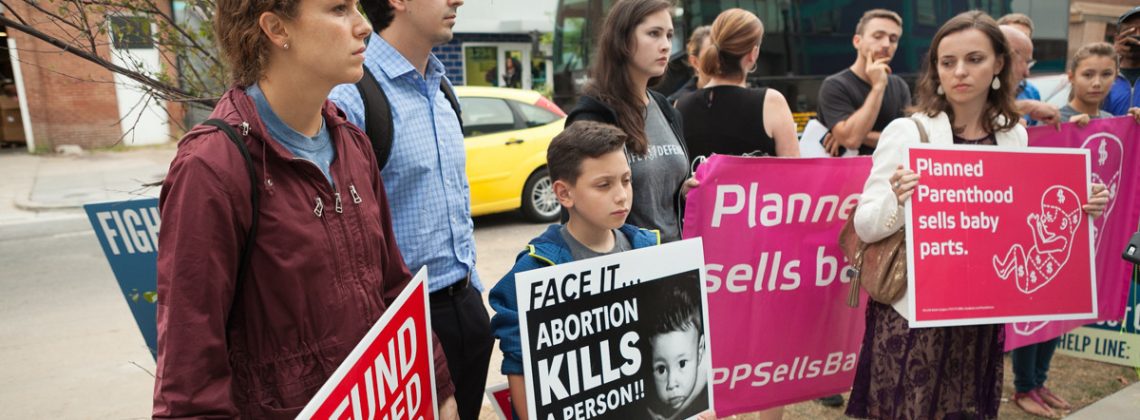
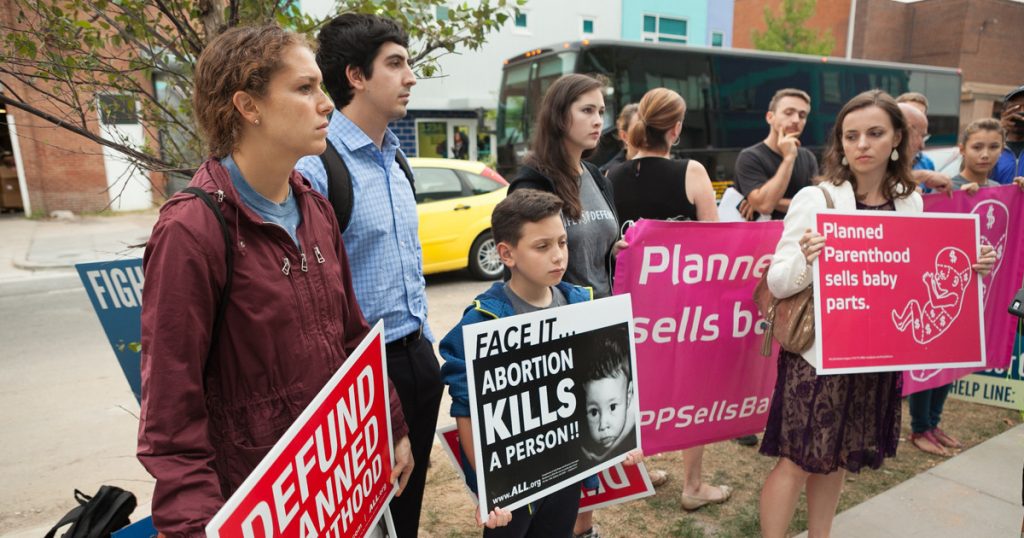
What would it take to convince these women to give the gift of life to their unborn child? Probably not a sign shouting “Let your baby live,” complete with fetal photographs. These women have already seen ultrasound images during their first pregnancies, and they would like to give their children life if they could. In fact, women who have abortions often say they are doing so to protect the children they already have—because they believe they cannot continue to support their first child if they choose to give life to their second.
But what if a pro-life protestor stood outside an abortion clinic with a sign saying, “Having trouble paying rent this month? Want help? Free financial assistance available for you and your child!”? Or what if they supported political programs to expand health care, rent subsidies, free college tuition, and other benefits to the working poor? The pro-life movement has not usually viewed rent subsidies as a pro-life measure, but given the demographics of abortion today, policies like these might save more unborn lives than a protest outside an abortion clinic ever could.
One thing is certain: The women who have abortions today are usually not the people shaping pro-choice policies. If pro-life advocates want to reduce the number of abortions among these women, arguments about the humanity of the fetus won’t be relevant, because many of the women obtaining abortions already hold such beliefs. But real offers of financial assistance might help.
Daniel K. Williams is a professor of history at the University of West Georgia and the author of several books on religion and American politics, including God’s Own Party: The Making of the Christian Right and The Politics of the Cross: A Christian Alternative to Partisanship.

Daniel K. Williams is Senior Fellow and Director of Teacher Programs at the Ashbrook Center at Ashland University in Ohio and is the author of several books on religion and American politics, including God’s Own Party: The Making of the Christian Right and The Politics of the Cross: A Christian Alternative to Partisanship.