
Does “sex positivity” offer hope to creatures like us?
Reader, are you sufficiently sex-positive? Probably not. The way is narrow, and few there are who even understand the term, at least outside academia. In simple language, being sex positive means affirming every conceivable impulse or practice related to sex as long as it doesn’t involve coercion—even subtle coercion. Torture itself is fine as long as everybody’s on board with it (and please don’t forget to recycle).
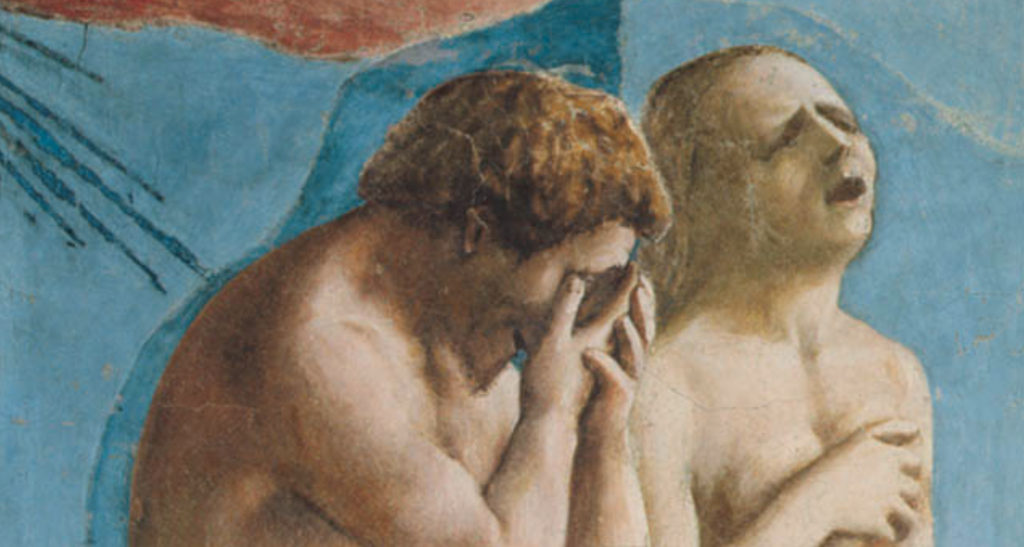
The energy behind the sex positivity movement lies in the conviction of social reformers that shame is bad for our health and well-being. Really bad. To the sex-positive, shame is viewed as a social disease endemic to cultures where families and groups (tribes, churches, etc.) place high expectations on individuals. Which is all of them. Since cultures can’t feel pain in the sense that individual humans can, the best way to lessen human suffering is to free individuals from shame about who they are by (1) changing cultural power structures, eradicating “negativity” about sex, including most taboos; and (2) helping individuals defy negative sex culture and accept most of their desires as either neutral or good.
Whether you think the sex positivity movement is brilliant or bonkers, you’ll probably agree that we humans have a real problem with shame. Many of us are so weighed down with it that we barely function. It’s not uncommon to meet saint-like people who nurse monstrous shame-babies in their heads, feeding them round-the-clock with self-criticism, self-castigation, self-loathing. Also, it’s easy to see that a lot of human shame does attach to the sexual urges of our bodies, which more than any other physical needs post-infancy drive us toward the bodies of other people (or, as a less complicated substitute, pornographic representations of other bodies).
Which brings us to what I think is the crux of it all. Sex is a subset of certain crucial bodily needs that we can only satisfy by depending on those difficult, elusive, and ultimately disappointing creatures called other people. From babyhood, we are dependent on other humans to nourish us, offer us friendship and safety, and at some point make love to us and produce children. Then care for us in old age. That’s a lot of need beyond our control. And what is shame in the context of so much dependence? It’s the guidance mechanism that tells us not to act in ways that will drive other people—those necessary but untrustworthy creatures—away from us. Shame is what happens when an evolution-guided impulse—that is, a messy, vague, and ill-defined but almost irresistible urge toward other bodies—mixes with the evolution-guided terror of being unworthy, unwanted, and ultimately abandoned. It lingers on the boundaries of many of our choices, telling us not to stray too far from what other people will tolerate. And for many of us, the depth of anxiety that shame produces turns it into our personal monster: it becomes the despairing, hellish voice that tells us we have been weighed in the balance and found wanting. Soon, we will be Bantha fodder.
The sex positivity movement asks us to deal with our desperation by using social programming to turn ourselves into a community of bonobos. Bonobos are our gentle, sex-obsessed primate cousins. They are the hippy swingers of the simian world, chill commune dwellers of Congolese forests. They don’t get much done, but they party like lesser British royalty, nuzzling each other in the treetops while their chimpanzee relatives are off plotting how to kidnap Charlton Heston. I remember a PBS host intoning that we should all strive to be more like bonobos. He spoke in the voice of one encouraging us to be more like Saint Francis.
But is bonobo morality even an option for us? Granted, anyone with the spongiest Abrahamic religious bone in their body (including me) is going to recoil from the idea. But you don’t have to be cozy with the Old Testament to think that it may be too late for the human race to evolve into such a sexually relaxed species. Human sex has long invited the moralistic interest and judgment of families and communities, partly due to the dangers that make us so reliant on each other. We are a species helpless at birth, and we have very large heads. For millennia, the biggest question in human sex has not been, “Can I find partners who match my sexual energy?” but “How do I push a coconut-sized baby head out of my body?” And also, “Who will help me gather in the crops while I breastfeed three children under five?” Families and communities have guarded the reproductive process because of the physical vulnerability of the ones who endure the traumas of its downsides—what we now call “natural childbirth”—and also because they have skin in the game. Children must be born; people must claim them and care for them, and then the children must become the caretakers. (Yes, all of this has usually devolved into societies policing the bodies of women.) Until the very recent advent of modern medicine, sexual need has been too intertwined with the specter of death for love to be “free”. Human sexual love has required dependence on the faithfulness of unfaithful people, and this has made it the perfect breeding ground for anxiety and shame. It’s hard for me to believe that any amount of education or media campaigning can separate shame from sex.
If this is true—if anxiety and shame around sex are simply part of our DNA at this point—then we may be stuck with it. In fact, if sex positivity crowds out older cultural and religious ideas about sex, and few taboos are left, then it’s possible shame will just switch sides. People will start to feel shame about negativity—in other words shame about being ashamed.
It all makes me wonder if, rather than fighting shame on all fronts, we should accept it as part of the normal human struggle. Evolution has been a messy process. We inherit so many difficult things from our deep past—desires and impulses that are overwhelming and often contradictory. Love bids us welcome, yet our souls draw back. Instead of denying the possibility of better destinations ahead—that is, ways of relating to other people that are virtuous rather than simply need-based and non-coercive—why can’t we depend on the tools that nature and culture have given us to help us find those ways?
These tools include cultural traditions and critical thought (the gift of our large heads), but also religious belief, which can help us overcome the fear of death and see intrinsic worth in ourselves and other people. Religion can help us discriminate between shame, which is the fear of other people (and very difficult to extinguish), and true guilt, which is the responsibility we bear as individuals for actual wrong. The first step to dealing with true guilt is to admit we’re guilty. Ironically, it’s often shame that makes us so unwilling to do that.
M. Elizabeth Carter is a counselor and writer living in Alabama.

M. Elizabeth Carter is a counselor and writer living in Alabama.