
I am thankful to historian Seth Bruggeman for writing this piece at Inside Higher Ed. It put into words much of what I was feeling last semester in one of my classes and raises some important points about teaching college […]
Way of Improvement

Liberals “abandoned the truism that arguments are true or false, irrespective of the race or the origins of the person who makes them.”

Michael Ignatieff is the former leader of the Liberal Party of Canada. Here is a taste of his New York Times piece, “I was born liberal. Defeat taught me our hidden reslience.” Ignatieff writes: “To rebuilt liberalism, we’ll need to […]
The Author’s Corner with Christopher E. Hendricks

Christopher E. Hendricks is Professor of History at Georgia Southern University, Armstrong Campus. This interview is based on his new book, The Colonial Towns of Piedmont North Carolina (University of Tennessee Press, 2024). JF: What led you to write The […]
Commonplace Book #310

Granted, today, thanks to platforms like Patreon, YouTube, or Substack, there is a possibility to become a sort of “populist” influencer–to retain a voice and a livelihood independent of mainstream gatekeepers and patronage via crowdfunding (particularly for those who have […]
The Author’s Corner with Tom Smith

Tom Smith is Keasbey Research Fellow in American Studies at Selwyn College, Cambridge. This interview is based on his new book, Word across the Water: American Protestant Missionaries, Pacific Worlds, and the Making of Imperial Histories (Cornell University Press, 2024). […]
60 German universities leave X

In case anyone was wondering, I still do not have my X account back. And I am not losing much sleep over it, probably for the same reasons 60 German universities and research universities are not losing too much sleep […]
Why Jimmy Carter chose “Imagine”: two views
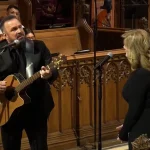
During his state funeral last week, Trisha Yearwood and Garth Brooks sung the John Lennon song “Imagine.” Why would Carter pick a song that begins: Imagine there’s no heavenIt’s easy if you tryNo hell below usAbove us, only sky Imagine […]
Commonplace Book #309
Consider the myriad cases where policies and initiatives intended to benefit historically marginalized and disadvantaged groups end up primarily serving elites from those groups, while the people from the target populations who actually need help end up benefiting far less, […]
Sunday night odds and ends
A few things online that caught my attention this week: Jonathan Haidt and others are winning the battle over smartphones in school. Are graduate students in history doing sloppy work? Why did Jimmy Carter choose “Imagine.” The Muslims who fought […]
Commonplace Book #308
…liberal democracy in the late modern world will not find renewal without the moral imagination to envision a public life that transcends the present warring binaries, and with it, a fresh vocabulary with which to talk about and pragmatically address […]
Commonplace Book #307
Though the North’s triumph in the Civil War followed by the passage of the Thirteenth, Fourteenth, and Fifteenth Amendments to the Constitution were great and necessary achievements, the laws could do only so much work. A new solidarity was imposed […]
A Christian view of diversity is rooted in unity
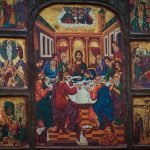
Here is moral philosopher Charles Camosy at Religion News Service: …suddenly, skepticism about all kinds of DEI abounds. Even The New York Times did a long and deeply reported piece on how DEI is failing in higher education, particularly at the University […]
Gino Auriemma on NIL and the transfer portal

The University of Connecticut women’s basketball coach is exactly right:
Jim Grossman reflects on his leadership of the American Historical Association
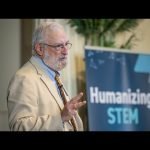
After fifteen years at the helm of the most important historical association in the world, Jim Grossman is stepping aside. Here is Ryan Quinn at Inside Higher Ed: A chapter of history is closing: Jim Grossman is retiring after 15 […]
Jimmy Carter’s Farewell Address: Nuclear disarmament, environmental stewardship, and human rights
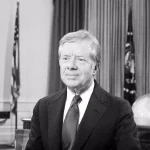
January 14, 1981: Read it here.
Commonplace Book #306
On all sides, key public intellectuals, activists, politicians, and the various institutions they represent have, for all practical purposes, given up trying to work through their differences. Few, it would seem, have the appetite for it. What, they might plausibly […]
Jimmy Carter’s “life was a testament to the goodness of God”
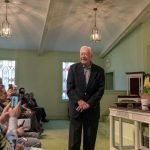
Here is Jimmy Carter’s grandson Jason Carter today at the former president’s memorial service: I was struck by three things during the service There was a different kind of “power” on display here. Watch the recessional here: Until the very […]
Reviving intellectual life in the university is “more than simply promoting the humanities or encouraging interdisciplinary study”

Earlier today I posted on Steven Mintz’s categorization of university professors. Read it here and figure out where you fall in Mintz’s taxonomy. Mintz’s categorized professors as part of his larger thoughts on how to make universities less anti-intellectual. Here […]
What kind of professor are you?

Here’s a post for the academics who read this blog. Over at his Inside Higher Ed blog, historian Steve Mintz writes: “As an academic, I’ve encountered a complicated taxonomy of professors that goes beyond these stereotypes.” He suggests ten categories […]
Pamela Paul: “it would be better if the A.H.A. as an institution never weighed in on political conflicts”

Yesterday we called your attention to the American Historical Association’s resolution on “scholasticide” in Gaza. Get up to speed here. Today, New York Times columnist Pamela Paul, who attended the AHA business meeting where the resolution was approved, weighs in. […]