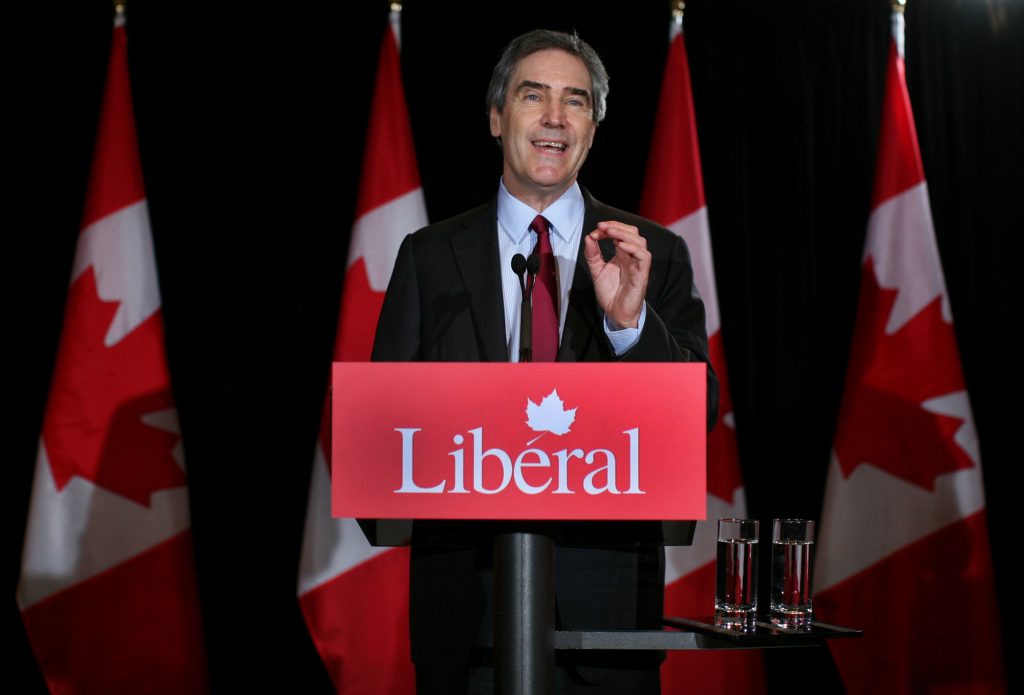
Michael Ignatieff is the former leader of the Liberal Party of Canada. Here is a taste of his New York Times piece, “I was born liberal. Defeat taught me our hidden reslience.” Ignatieff writes: “To rebuilt liberalism, we’ll need to recover what the word used to mean.” Here’s more:
By the late 1990s, the conservatives began to gain power by playing to the resentments of the ignored. The authoritarian right, especially, understood that it could build an entire politics on mocking the blindness of the liberal elite. It didn’t need solutions; stoking the rage was enough. We are now the embattled object of that rage. What will it take to earn the trust of those whose discontent we ignored? Liberalism in the next generation will need to save social solidarity from the “creative destruction” of the market by rebuilding the fiscal capacity of the liberal state and investing in the public goods that underpin a common life for all. Saying this, at a high level of generality, is easy enough: The tougher part will be finding the language and the cunning to convert a radical liberalism into a politics that wins elections and a governing strategy that pushes change through the veto-rich thicket of interests waiting to derail our best-laid plans.
In the meantime, we lament the “identity politics” of our populist and authoritarian competitors, when it would be more honest to admit that identity is where all political belief actually comes from, including our own. My identity — charter member of the White professional classes of Canada — defined my liberalism. What the liberal critique of identity politics does get right, though, we owe to our much-maligned individualism. Identity is not destiny. Every formative confrontation with reality presents each of us with political choices. We can either make up our own minds or borrow someone else’s beliefs. The convictions that stick are the ones that we decide for ourselves. The beliefs that we hold on to are the ones that first required a primal “yea” or “nay” to the allegiances we started life with. In the 1960s, I could have rebelled against my parents’ liberalism. Many of my generation did. Instead, I said yes to the world I was born into and the parents I was lucky enough to have.
The Canada I grew up in had been White and aggressively heterosexual. By 1980, I was living in a multiracial and sexually pluralistic society, teaming with new citizens from every corner of the globe. The contrast is captured in a comparison of my University of Toronto graduation class photo of 1969 (mostly male, at least professedly straight, all White) and the graduation photo of the same age group, at the same college, in 2024 (majority female and every color of the rainbow, turbans, hijabs and skullcaps all expressive of a new diversity that we liberals quickly turned into a religion of its own).
This still-unfolding multidimensional revolution turned out to be the cardinal liberal achievement of my era, but it enormously complicated the liberal task of finding the middle way between the Scylla and Charybdis of extremisms. We were naive about the nature of this problem, preferring to believe that all reasonable human beings would embrace a revolution of inclusion, when the reality was that our generation had upended the entire social order, and even our own place in it. Diversity — of gender, sexual orientation, race, religion and class — was a virtue in comparison to the dire cantonment of peoples in silos of exclusion, but liberals turned diversity into an ideology. Once an ideology, it quickly became a coercive program of invigilation of speech and behavior in the name of dignity and respect.
Credentialed White people of my generation welcomed the revolution because we could invite recruits of color into our ranks without ever feeling that our own elite status was being challenged. We didn’t seem to notice that nonelite White people were threatened, even betrayed, by the new multiracial order. Faced with what we thought was White racism and sexism, when it was mostly fear, we began promulgating codes of speech and conduct to impose diversity as a new cultural norm. New bureaucracies in universities, corporate headquarters and government offices enforced diversity at the price of freedom: the freedom to defend unpopular loyalties, to freely dislike others, to be funny at other people’s expense, to be critical of the pieties of others but especially our own. A liberalism whose defining value should have been liberty invented a diversity and inclusion industry whose guiding principle may have been justice but whose means of enforcement included coercion, public disgrace and exclusion.
Worst of all, we censored ourselves, willingly turning off our bullshit detectors and stilling the inner doubts that might have made us confront our mistakes. We abandoned the truism that arguments are true or false, irrespective of the race or the origins of the person who makes them. We began promoting arguments as true based on the gender, race, class, origins or backstory (oppression, discrimination, history of family violence) of the person uttering them. The value that we placed on diversity and inclusion led us by stages to jettison a care for truth itself. We ended up compromising the very epistemological privilege that had provided us with such unending self-satisfaction.
In failing to pay heed to the fears of displacement that the liberal revolution created, we ended up creating a vital political opening for every strand of extreme opinion lining up to speak on behalf of everyone whom liberals had stopped listening to. By the 2020s, most liberals were walking back, at first nervously, and then with increasing speed, from our own self-righteous politics of virtue. First, we made everyone else sick of our virtue-signaling, and then we became sick of it ourselves.
The irony was that the liberal revolution destabilized liberals as much as it upset those who were resisting it outright. For it was the liberal revolution of inclusion that fragmented the centrist consensus that had made the liberal revolution possible in the first place. Once each group — Black, female, gay and transgender — achieved emancipation, many of them began to identify with their own group to the exclusion of wider civic-sized political aggregations of interest. The old political parties — Liberal in Canada, Democratic in the United States, Social Democratic in Europe — that had presided over the liberal revolution now saw their White working-class base heading for the exits and their multicultural support splintering into autonomous groups that each began to make a strange new epistemological claim: You can understand me only if you are like me. Only Black people can understand the Black experience of racism and police violence. Only women can understand the tyranny of patriarchy and the fear of male sexual violence. Only gay people can understand what same-sex love truly means.
Read the entire piece here.