Over at CNN, Zachary Wolf interviews Andrew Jackson scholar Daniel Feller on comparisons on the “spoils system.” Here is a taste:
WOLF: You’ve written extensively about the spoils system. How would you describe it to Americans today?
FELLER: It is a system by which government offices are filled by people whose major qualification is their political service to the president’s party.
WOLF: How did it kind of come about during the Jacksonian era?
FELLER: The rise of the spoils system during and after Jackson’s presidency – it wasn’t all Jackson’s doing – was attendant upon the rise of political partisanship in the United States.
In the years before Jackson, when party conflict had been muted and confused and even, at times, virtually invisible, then there was no reason, no motive, to appoint federal officers on the basis of partisan affiliation.
What makes this partly complicated is the image that we have today of Jackson getting into office and firing everybody and then replacing them with party hacks. That is partly true. It’s not a false image, but it’s not as simple as that.
Jackson did not overtly intend to create a spoils system as so called. What he thought he was doing was cleaning out the federal bureaucracy from people who would become lazy and arrogant and incompetent, and replacing them with better ones.
But it is true that service, not to him personally, but to what Jackson called the “cause of the people,” was one of the qualifications. This certainly provided an opening for people whose main qualification was party service to put themselves in line for jobs. And then the whole thing became institutionalized after Jackson.
It became routine that people like postmasters and customs officers were going to be cleaned out when there was a transfer of administration….
WOLF: It’s impossible to directly apply news events today to what happened with a completely different federal bureaucracy in the 1820s and 30s, but as you read the news, what kinds of echoes and differences do you see?
FELLER: Well, there certainly are echoes. There certainly are some surface level similarities. And we can’t resist noticing those.
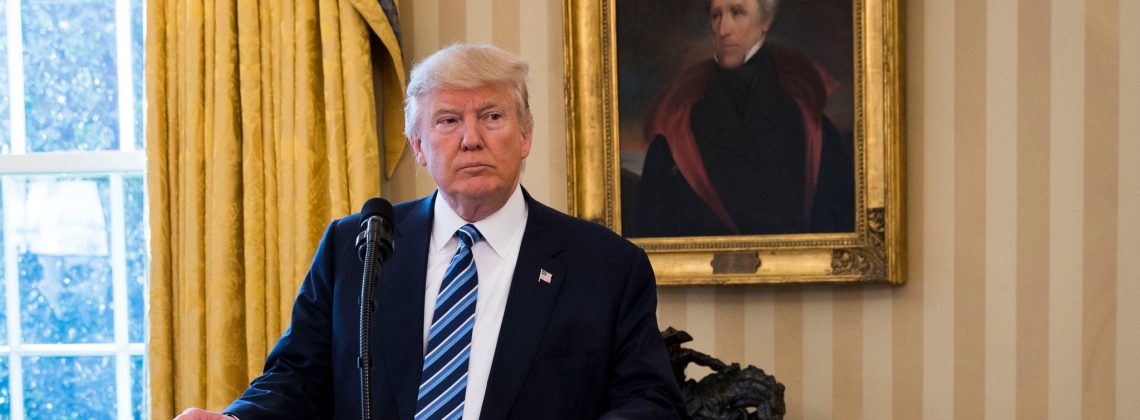
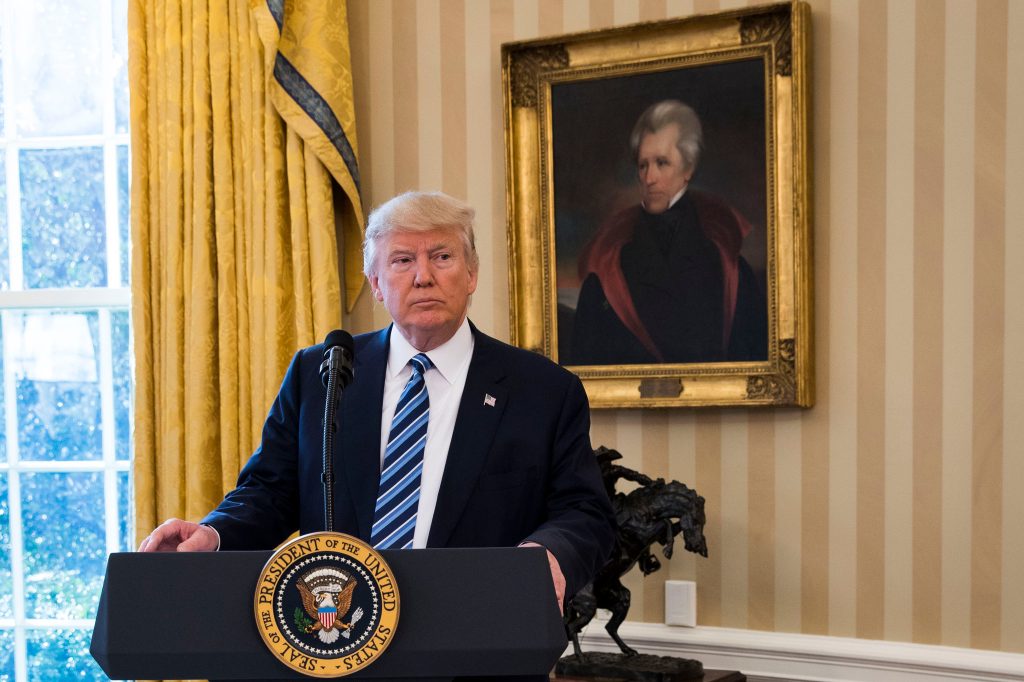
I think Donald Trump thinks he’s just like Andrew Jackson, and I can point out some rather startling ways – and really historically brazenly obvious ones – in which he’s not.
But there is this similarity that both Trump and Jackson came into office thinking of themselves as outsiders to the ongoing government establishment and thinking that establishment was hostile to them and likely to be hostile to their policy initiatives. There’s a certain amount, not only of overthrow of personnel, but of personal grievance, resentment, behind it.
Trump himself used the word retribution a whole lot. Jackson did not use the word retribution, but he was certainly seeking retribution. There were not only people he wanted to put in place. They were, more particularly, people he wanted to fire. So there is that similarity.
WOLF: I’m interested in the differences, because I do think that Trump sees himself as this kind of Jacksonian figure, to the extent that he thinks about it.
FELLER: Trump’s overhaul of the patronage is much more policy driven, or much more policy-grievance driven than Jackson’s was.
When Jackson replaced customs officers, for instance, and when he replaced a whole bunch of district attorneys, he was not signaling any kind of policy differentiation here. He wasn’t doing this in order that the customs be collected differently.
What Jackson complained about, about the people he removed, was that they’d become arrogant through long tenure – they had become indifferent to the needs of the public that they were serving. They had become lazy, and they had used their official position to oppose his campaign, to oppose the voice of the people. You could find some similarities between that and Trump, but Jackson’s response to all this is to put in customs officers who will just go ahead and collect the customs, which is what the previous officers had been doing. With the district attorneys it was the same thing. There wasn’t any idea that by replacing the district attorneys, we’re going to stop prosecuting one whole category of people and start prosecuting another.
So in a way, Trump’s attack on the bureaucracy is much, much deeper. It’s not just a matter of personalities. It’s a matter of – I don’t know if the right word is overall ideology or something else – but it’s an attempt not only to switch some people out and to improve efficiency, but to entirely restructure and in some cases overtly destroy aspects of the federal government.
The other big news the last few days has been the tariffs, and Trump, back during his first term, actually, gave speeches in which he said, I’m just like Andrew Jackson and Andrew Jackson imposed tariffs to protect American workers.
It’s the exact opposite of the truth. The literal, exact opposite of the truth.
Read the rest here.
I thought Jackson wanted to get rid of the Bank of the United States because its lending went to elites and he was too lately rich to be among them. So it could be considered retribution to do away with a national bank. It led to economic troubles. Now Trump thinks he should be able to sway to Fed to do his bidding. What will he do if it doesn’t?
In 2024 by 2028– Looking back to 1828– In 2024, we took a little trip-Along with Cap America, DJTrump down the mighty victory Flip–We took a few cheeseburgers and some good Mc fries. And we caught the leftist loons in the swing states, and watched their hopes die.
The leftist kept a-comin’ with their lies and the DAs, but the SCOTUS shot them down, till there wasn’t as many as a while ago. We won once more and they began to runnin’. Down the Mississip to tha Gulf of Mexico–Ur we mean the Gulf of America, 25 to 28 here we go.