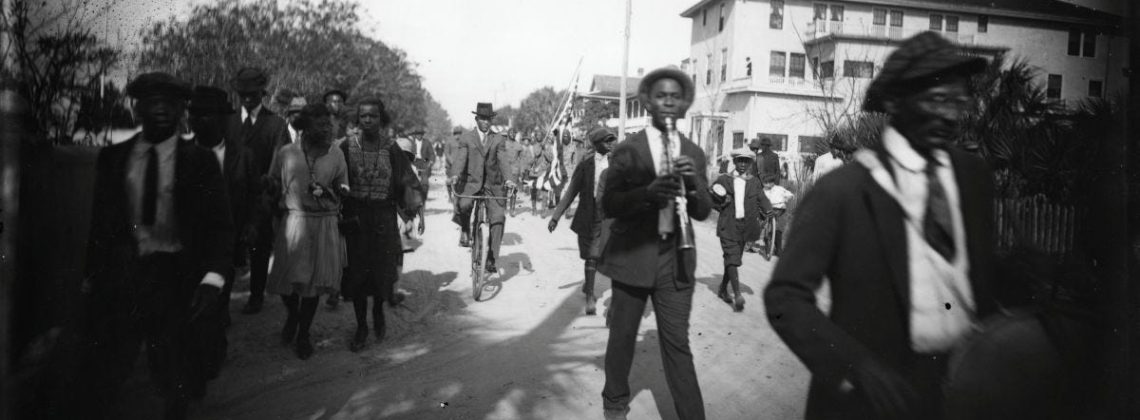
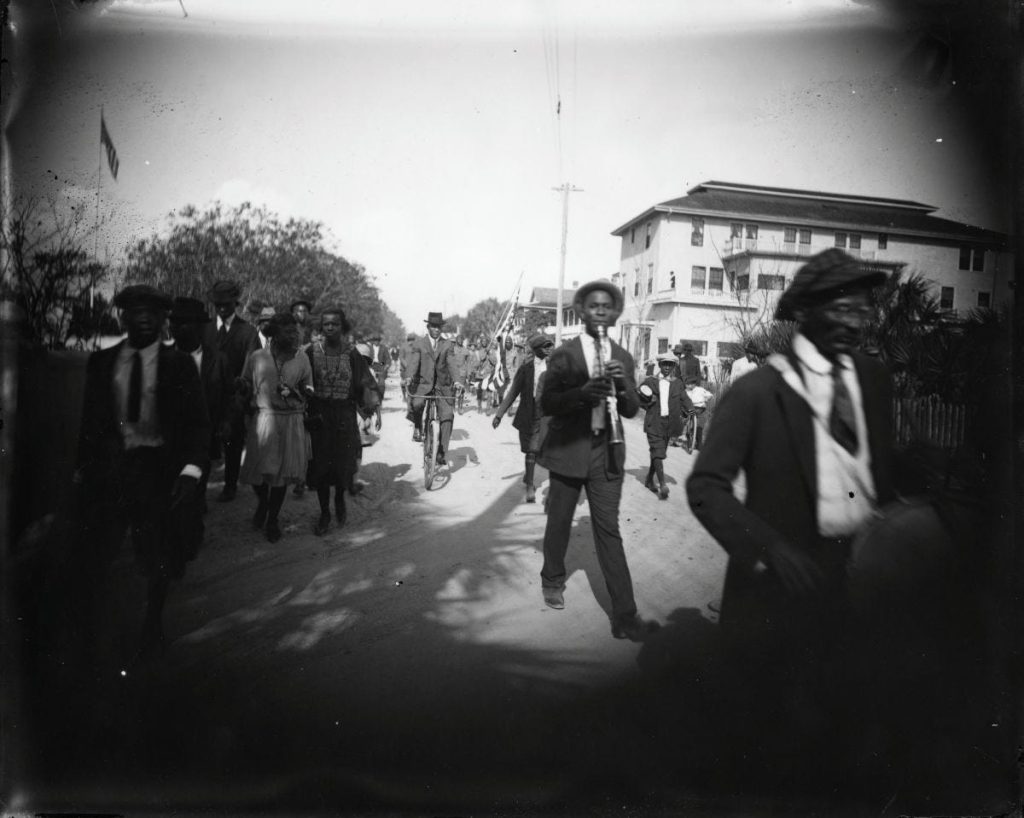
Historians Susannah J. Ural and Ann Marsh Daly tell the stories of Black men and women celebrating emancipation well before Juneteenth became a holiday. Here is a taste of their piece at The Atlantic:
In a quiet corner of a library at Mississippi State University, you’ll find a slim red volume that tells the story of what may be America’s first Juneteenth. It took place in New Orleans in the summer of 1864 to celebrate the day of liberation for the enslaved people living in the 13 Louisiana parishes exempted from President Abraham Lincoln’s Emancipation Proclamation, issued the previous January. It was actually a series of celebrations—or jubilees, as these were known—over two extraordinary months, with the largest occurring on June 11, a month after the Free State Convention abolished slavery across Louisiana.
Newly freed New Orleanians gathered in mass public meetings—celebrations, parades, church services, and displays of Black arts and sciences—of the kind that had been banned under slavery. Each gathering brought together the city’s Black community—the recently emancipated and those already free—to celebrate a future of citizenship, sacrifice, learning, and social advancement. In doing so, they showed themselves and the wider world that they were a united community, ready to protect their families, demand economic justice, and claim their rightful place as citizens.
Juneteenth—sometimes called America’s second Independence Day—takes its name from June 19, 1865, when the U.S. Army in Galveston, Texas, posted a proclamation declaring the enslaved free. In 1866, Black Galvestonians gathered to commemorate the date of their freedom, beginning an annual observance in Texas that spread across the nation and became a federal holiday in 2021. But the slender volume in the Mississippi museum, and the summer-long celebrations in New Orleans that it records, invites us to realize that Juneteenth was a national holiday from the start.
In January 1863, Black New Yorkers celebrated the issuance of the Emancipation Proclamation with a jubilee at Cooper Union, just as African Americans did in Chicago and other cities across the North that year. But in New Orleans, they held what may be the first recorded mass celebration—the first Juneteenth—organized by formerly enslaved people rejoicing at the end of their own enslavement. Other such celebrations followed. In April 1865, for example, thousands of Black South Carolinians paraded through Charleston, celebrating the evacuation of Confederate forces and their own emancipation. And in June 1866, of course, Galvestonians began the commemorations that became a national holiday.
Accounts from New Orleans in the summer of 1864, in a city that was once the country’s largest slave market, confirm that the moment of liberation was America’s second Independence Day—and as in 1776, it marked the beginning of a fight, not the end. New Orleans’s celebrations were the first battle cry in African Americans’ struggle to achieve something more than freedom.
Read the rest here.