Historian and former Harvard professor Drew Gilpin Faust (check out our podcast interview with her here) has a piece on commencement speeches at The Atlantic. I love the subtitle: “Where everything and nothing is at stake.”
Here is a taste:
Most of these addresses will pass into oblivion. It is a cliché for commencement speakers to open their remarks by confessing that they remember nothing about their own graduation: They have forgotten not just what was said, but who said it. Yet even if most commencement addresses prove far from memorable, the press and public eagerly anticipate them. News stories appear throughout the winter and early spring announcing who will speak where. Then, when the speakers have spoken, journalists and commentators rush to judge which should be considered the year’s best.
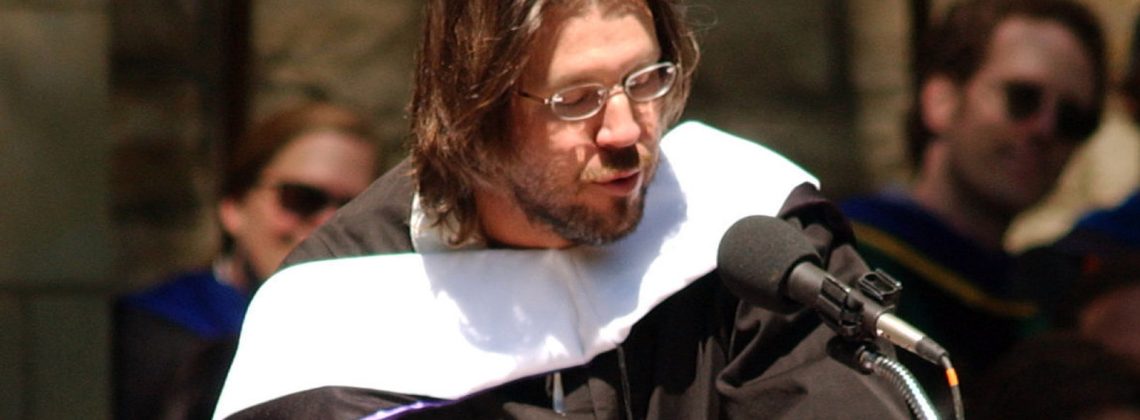
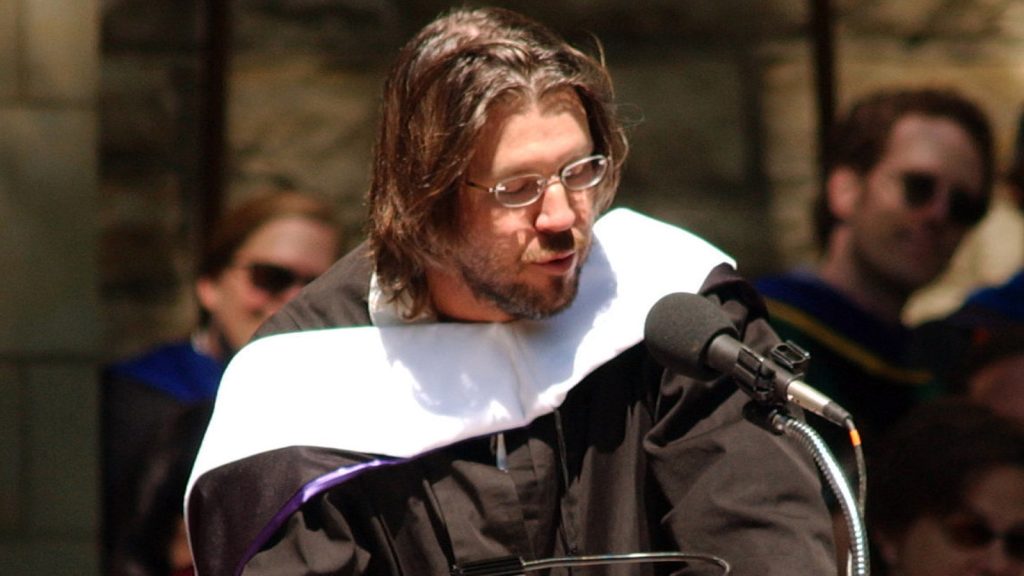
A few speeches are anointed as classics to be visited or revisited for years. Admiral William McRaven’s 2014 address at the University of Texas at Austin has had more than 60 million YouTube viewers, all eager to learn the 10 takeaways from his Navy SEAL training. Thousands of Americans likely hear echoes in their head every morning of his promise that if you “make your bed,” it will change your life. More than 60 million people have also watched Steve Jobs’s Stanford University speech from 2005, which eerily anticipates his own death and urges graduates to “follow your heart.” J. K. Rowling’s 2008 Harvard talk about failure and imagination has attracted tens of millions of viewers, as has David Foster Wallace’s 2005 Kenyon College address, “This Is Water.” All of these also ended up in print as well, designed to make attractive gifts. Admiral McRaven’s book became a New York Times No. 1 best seller. When Wallace died, in 2008, The Wall Street Journal republished the speech in his memory.
Commencement greatest hits reach well beyond these chart-toppers. Time, The New York Times, The Washington Post, Slate, Elle,and countless other outlets run articles each year on the season’s winners. “Looking for some new words of wisdom?” NPR asks on its website. The headline of its online database lists the 350 “Best Commencement Speeches, Ever” in alphabetical order (but, curiously, by first name), from Aaron Sorkin to Zubin Damania. Can all 350 really be the “best”?
The assumption behind commencement speeches seems to be that even as graduates don their black robes and mortarboards, they don’t yet know quite enough. They must await, or perhaps endure, some final instruction, absorb some last missing life lesson, before they can be safely launched into what their education has supposedly prepared them for. Almost always these days, this instructional capstone is delivered by someone outside the institution, someone expected to have insight that extends beyond a university’s walls—perhaps representing a first step in the students’ transition into the “real world.” Many colleges and universities try to attract the most famous person they can. As graduation season approaches, speaker announcements take on the hallmarks of a competition: Which institutions did President Barack Obama choose for his three or four addresses each year? Who snagged Oprah Winfrey? Or Taylor Swift?
Read the entire piece here.
My commencement speaker at Cairn University was theologian and faculty member John Cawood. I don’t remember anything he said in his commencement speech. But I do remember he was inspiring. Maybe it’s time to pull out my old VHS tape of the ceremony.
Mark Hatfield was my commencement speaker in college. He spoke as the evangelical he was and proclaimed the gospel.. This was in 1971.