Over at The New York Times, Carlos Lozada brings some historical context to Trump’s view of “common sense.” Here is a small taste:
In a recent social-media post, Trump quoted a line attributed to Napoleon (but likely adapted from a 1970 movie about him): “He who saves his Country does not violate any Law.” Trump has made similar statements before — in 2019, for example, he declared that the Constitution gave him “the right to do whatever I want as president” — yet the recent post may be his most forceful claim to power so far.
It is one thing to argue that the Constitution, the supreme law of the land, grants the president ever expanding powers. It is another to declare that the nobility of the president’s intentions — I am saving the country! — supersedes any law whatsoever. In both his Inaugural Addresses, Trump foresaw a “glorious destiny” for America, a destiny that he now believes he is meant to fulfill by divine right. “My life was saved for a reason,” Trump said in the second address. “I was saved by God to make America great again.”
Trump promised us a revolution of common sense, and he is delivering some of it, no doubt. But the president is also harnessing popular passions to accumulate power and diminish accountability. “Long live the king!” Trump recently said of himself, a quote that the White House posted on X, along with an image of a smiling Trump sporting a king’s crown.
Just some tacky trolling? Maybe. But the trappings of authoritarianism are part of Trump’s revolution, too, and for all their kitsch, they may prove lasting. Trump’s common sense means he “tells it like it is,” even when it isn’t.
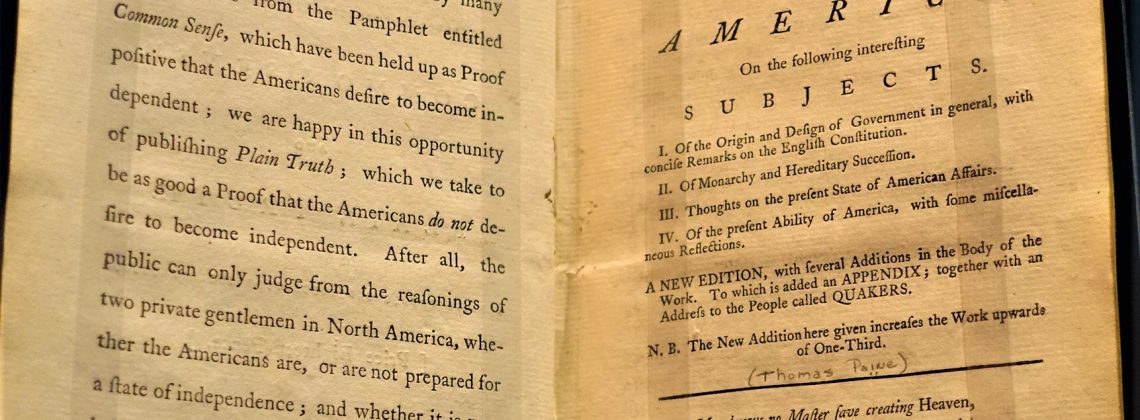
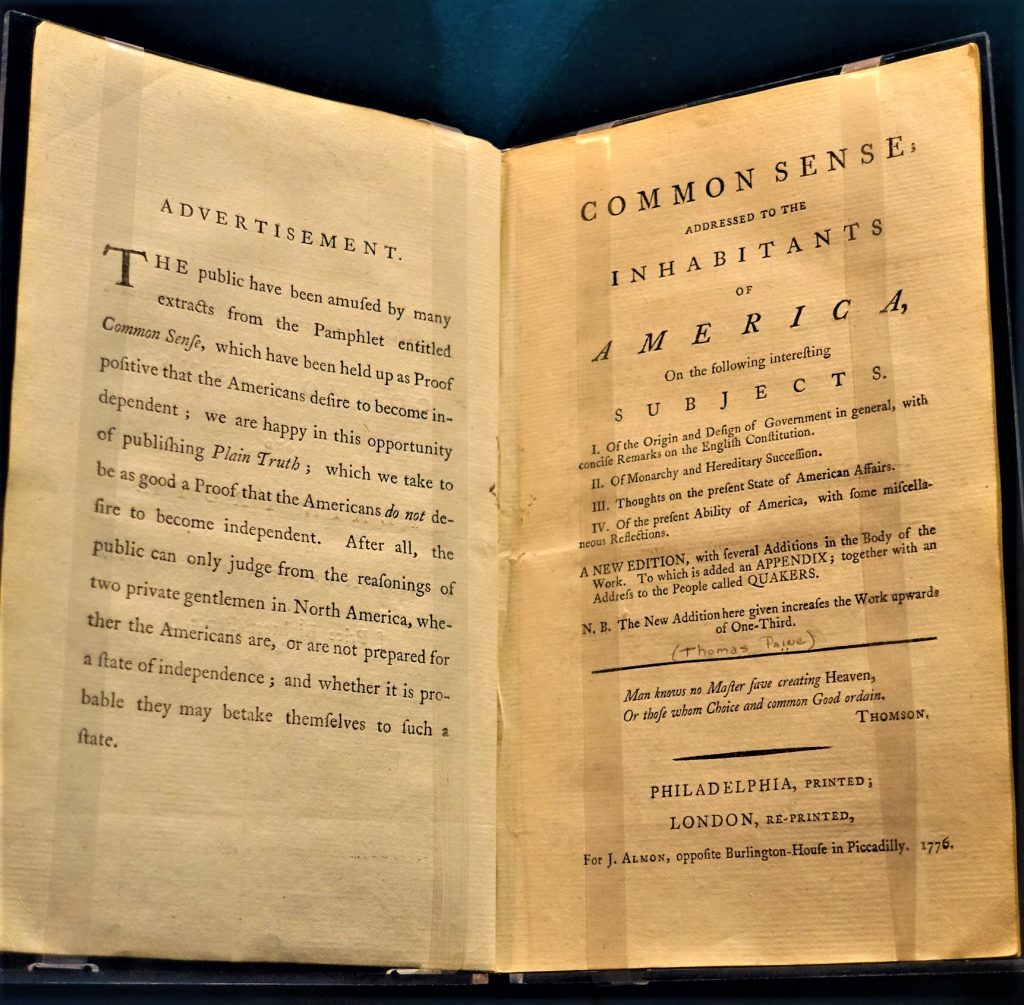
Almost 250 years ago, Thomas Paine also envisioned an American revolution, but it was an uprising aimed at stripping power from a leader, not imbuing him with it. In “Common Sense,” Paine had much to say about leaders who “look upon themselves born to reign, and others to obey.”
Writing about King George, that “Pharaoh of England” and “inveterate enemy to liberty,” Paine declared that the monarch is not “a proper man to say to these colonies, ‘You shall make no laws but what I please.’” He could have been writing of Trump, who, by disregarding constitutional principles and remaking justice as a tool of convenience and retribution, proves himself similarly ill-suited to govern.
“It is the pride of kings which throws mankind into confusion,” Paine wrote, warning of the risks of armed conflict under royal rule. He could have been writing of Trump, who muses about seizing foreign lands, who turns longtime allies into rivals and who paints opportunistic enemies as friends. Trump’s “America First” is not “the cause of all mankind” that Paine described, but a cause unto itself, and it throws the world into confusion.
“It only remains to know which power in the constitution has the most weight, for that will govern,” Paine wrote of English law. “And though the others, or a part of them, may clog, or, as the phrase is, check the rapidity of its motion, yet so long as they cannot stop it, their endeavors will be ineffectual; the first moving power will at last have its way.” He could have been writing of Trump, who, by bullying a pusillanimous Congress and denigrating judicial prerogatives, seeks to remake the executive into the first mover — perhaps the only one — among the powers of government.
“Emigrants of property will not choose to come to a country whose form of government hangs but by a thread, and who is every day tottering on the brink of commotion and disturbance,” Paine wrote. He could have been writing of Trump here, too. The president has not merely placed America on the brink of daily commotion and disturbance; he has already taken the plunge
Trump imagines himself the common-sense revolutionary of our time, a fearless disrupter of American history. But Trump is not the rebel. He is the crown.
Read the entire piece here.
Paine was way more in line with DJT’s vision and actions in regard to getting America separate from the -Swamp- of old D C way of doing things in the bogged down Congress. Paine wanted separation from -the Crown-of England control. DJT wants separation from the ideology of leftist -Woke- and the bowing down to the -Globalist- agenda control.
Common Sense is America and Legal Citizens-First- over illegal immigration and give aways that the UN and WHO and the dictates of the IJC want to impose on America.
So, call DJT a King want-a-be as most of the NYT articles do and I am sure you will, if you want to, but DJT learned in his first term depending on the old swamp creatures to get things done, doesn’t. Work. This time he is taking a Wrecking ball and moving with Bullet Train speed.