
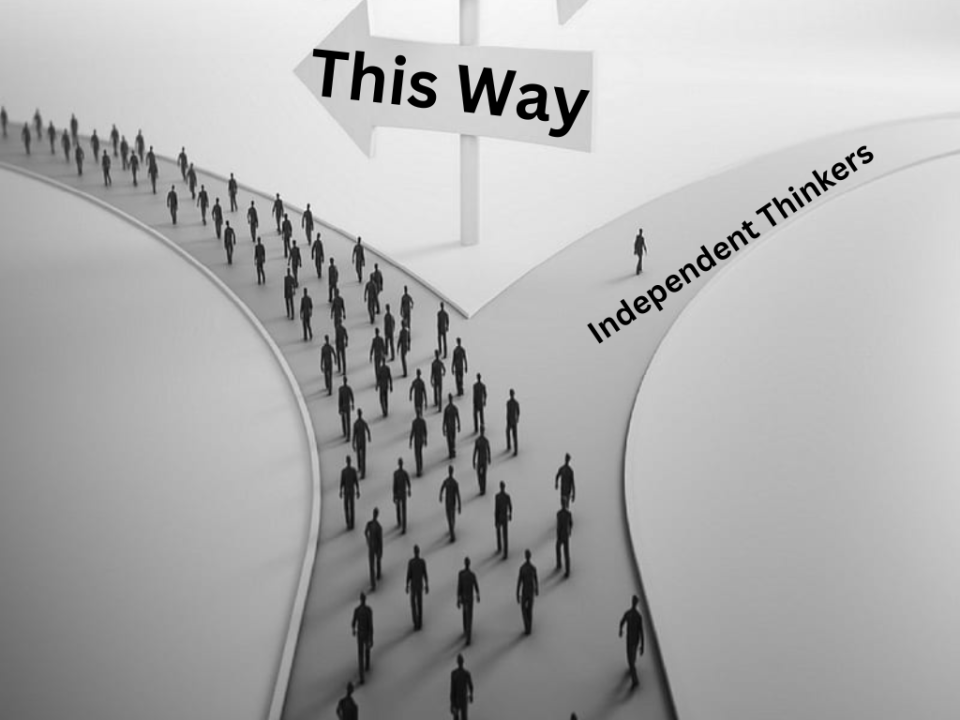
University of Texas historian Steven Mintz writes: “Imagine a public discourse where intellectuals don’t just take sides but challenge the assumptions underlying each perspective. He asks “what would it take for public intellectuals to serve as beacons of understanding rather than opinion leaders?” It is an important question to ask in age where the most popular academic or intellectual “influencers” seem more interested in activism than understanding or finding common ground with those to whom they differ.
Here is a taste of Mintz’s piece:
Social media and digital platforms have expanded intellectuals’ audiences but pressured them to simplify or sensationalize complex ideas for character limits, clickbait headlines and algorithmic preferences. In this setting, nuanced arguments are often reduced to sound bites, with intellectuals prioritizing engagement—likes, shares and followers—over depth, focusing on trending topics over critically important but less popular issues.
The current media ecosystem rewards branding and influence, encouraging some public intellectuals to adopt sensational or polarizing stances that reinforce popular opinions rather than challenge them. With large platforms, many intellectuals become aligned with specific ideologies, favoring content that confirms biases rather than fostering open debate. This alignment inhibits critical engagement across diverse perspectives and creates echo chambers rather than cross-cutting conversations.
In the past, forums like Partisan Review or The New York Review of Books upheld intellectual standards, providing reliable benchmarks for depth and rigor. Today, the lack of centralized standards in a decentralized space has diluted intellectual credibility, making it difficult to distinguish serious thinkers from those prioritizing visibility over quality.
Public discourse has also become deeply polarized, with intellectuals often catering to one side of the ideological divide, reinforcing divisions instead of fostering dialogue. Many capitalize on polarized debates rather than attempting to bridge them, leading to a fragmented discourse where ideas serve ideological confirmation rather than understanding.
Increasingly, public intellectualism is treated as infotainment, where intellectuals compete for attention by being charismatic, witty or provocative—qualities that entertain but rarely contribute to meaningful public understanding. This performative aspect shifts focus from substantive ideas to the personalities of intellectuals, encouraging superficial engagement over the deep contemplation essential for genuine intellectual discourse.
Traditionally affiliated with universities, journals or think tanks, public intellectuals once had institutional support that upheld standards and fostered rigor. But as these institutions become corporatized or weakened by funding cuts, intellectuals often lack the grounding that encourages nuanced exploration, instead gravitating toward platforms that reward visibility and quick opinions over depth.
The erosion of a single, educated public with shared values further complicates the impact of public intellectuals. Fragmented media has created isolated segments rather than a broad audience, making it difficult for intellectuals to elevate discourse at a societal level. Without a common intellectual foundation, public intellectuals lack a unifying mission, which hinders discourse that bridges demographic, ideological and educational divides.
Intellectuals also face pressure to adhere to specific ideological lines, leading to self-censorship and reluctance to challenge prevailing assumptions. This curtails honest exploration, as contrarian views are often discouraged, limiting discourse’s ability to examine uncomfortable questions and test assumptions—essential elements of intellectual work.
For public discourse to improve, public intellectuals must recommit to independence, intellectual rigor and genuine engagement with the complex issues society faces. By prioritizing depth over popularity, they can help restore the substance and nuance needed for a more informed and critical public.
Here’s more:
Public intellectuals should be guardians of nuance, explaining complex ideas in accessible ways. Yet as the line between intellectual rigor and ideological advocacy blurs, the role has lost much of its impact. If public discourse is to regain depth, we must ask if today’s public intellectuals are serving their true purpose—and, if not, how they can reclaim it.
Above all, the role of the public intellectual should be an act of service—an unwavering commitment to truth, nuance and dialogue that strengthens the fabric of public life. Rethinking this role means creating space for voices that transcend tribal loyalties and ideological limits. In a world divided by opinion, public intellectuals have the rare power to expand minds and deepen discourse. Embracing this responsibility, they can bridge divides by leading not with popularity but with the courage to question, illuminate and inspire.
The true role of the public intellectual isn’t to take sides or amass followers but to elevate the public’s capacity for critical and empathetic thinking. In today’s fractured landscape, the need for independent, nuanced voices has never been more urgent. Public intellectuals willing to embrace this role can transform conversation, shedding light on difficult issues and restoring the dignity of thoughtful discourse in a world hungry for depth.
These intellectuals can be true stewards of public understanding, but only if they commit to independence, depth and honesty. By prioritizing inquiry over influence, they can guide a society increasingly driven by division and ideology. Rethinking their role helps us reclaim a discourse that values truth over sound bites and understanding over consensus.
In a time when complexity is often sacrificed for simplicity, public intellectuals must encourage deeper thinking, question assumptions and seek understanding. Those who lead with integrity and depth can transform public discourse—nurturing a society that is not only informed but enlightened.
Read the entire piece here.