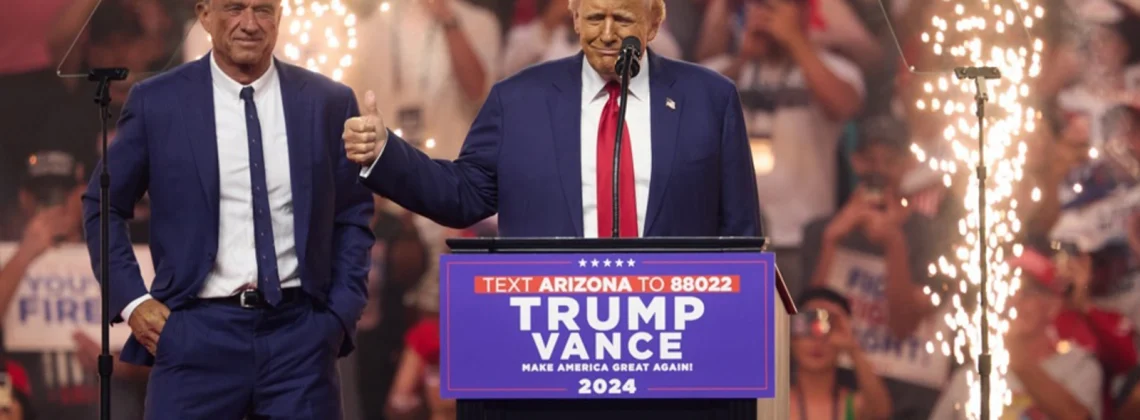
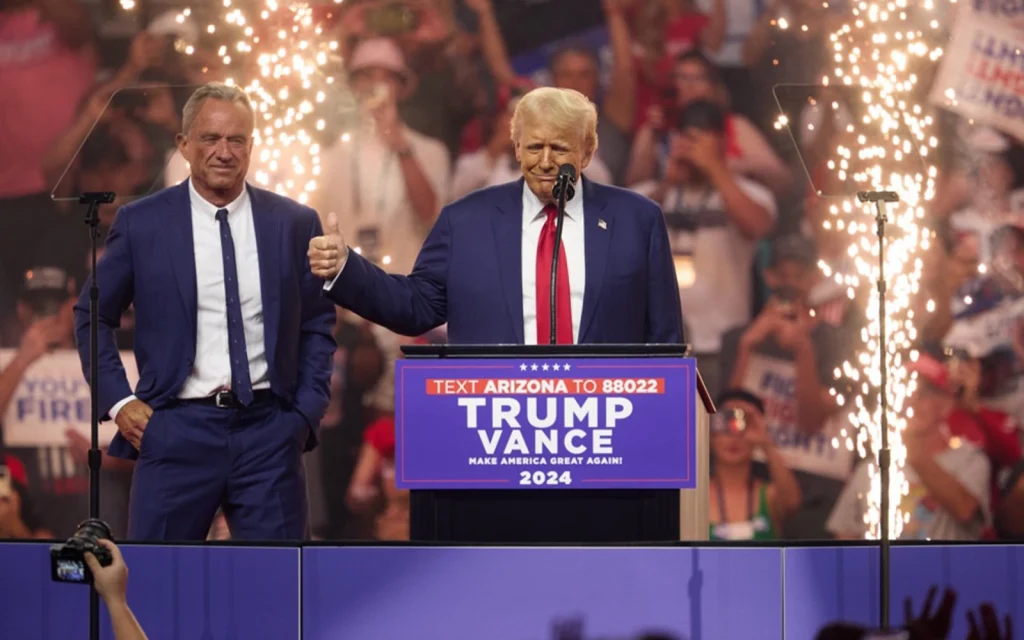
Yesterday Robert F. Kennedy Jr. was sworn in as the Health and Human Services secretary. Over at Politico, Peter S. Canellos wonders what his uncle Teddy might think. Here is a taste:
When the late Sen. Ted Kennedy hired a bus and took his three kids and 26 nieces and nephews on family-bondingraft trips, sailing adventures and pilgrimages to places like Valley Forge and Bunker Hill, he couldn’t have envisioned the scenes of recent weeks.
Robert F. Kennedy Jr.’s confirmation as health secretary established him, the family gadfly, as the effective standard-bearer of the next generation. The most potent liberal dynasty of seven decades went MAGA. And it happened with a heavy dose of Trumpian fracturing and chaos and recriminations.
Caroline Kennedy, the family’s most poignant keeper of the flame, telling gruesome stories of her cousin Bobby gleefully placing live chickens and mice in a blender, while luring his younger siblings into drug use. Jack Schlossberg, the family’s great hope, posting angry words like “liar” and “guru shaman figure” while his uncle testified before Congress. Five of Bobby’s siblings decrying his conversion to Trumpism as “a sad ending to a sad story.”
In truth, the Camelot myth has been fraying for decades, like spidering cracks in the once-ubiquitous portraits of the martyred president on dining-room walls. Revelations of heavy drinking and “womanizing” — not to mention Teddy’s own lurid scandal at Chappaquiddick — undermined the once-robust sense of family values shared by this sprawling, touch-football-loving clan. Joe Kennedy III’s defeat in Massachusetts’ Senate primary in 2020 ended the perceived electoral inevitability. But now, with RFK Jr. taking his place alongside President Donald Trump, two more pillars of the Kennedy mystique have fallen: the sense of family loyalty and the integrity of the Kennedy political brand.
Through tragedy and scandal, the Kennedys kept on nurturing a common political faith, expressed in a breezily distinctive style. Unlike other family dynasties, such as the Bushes, in which each generation morphed with the times, the Kennedys were a fixed point on the political map: They were wealthy and famous and handsome, but they saw the pain and vulnerability of others.
Whether it was RFK Sr. knocking on doors of log cabins to draw attention to Appalachian poverty or marching with Chicano grape pickers in California; or Ted Kennedy walking through waist-deep water to fight famine in Bangladesh or demanding AIDS treatments when few would touch the issue; or Eunice Kennedy Shriver using her bustling energy to create opportunities for people with disabilities — the blending of serious, forward-thinking commitment and noblesse oblige was apparent in every gesture.
Fate decreed that Ted — the last surviving brother — would be the custodian of the family brand. As everyone knew, he was an imperfect vessel, especially when compared to his sainted brothers. But his long career proved that he understood as well — or better — what it took to carry that brand into new generations.
Even as his rivals portrayed him as louche and undeserving, Ted crafted landmark legislation in immigration, health care and civil rights, drawing on his family’s political capital and adding to it at the same time. For five decades he drank from the Kennedy chalice: His hideaway office in the Capitol was a de facto museum of Camelot, and he watched visitors marvel at the special blessings and curses of being a Kennedy.
His dual roles as patriarch of the Kennedy family and CEO of the Kennedy political operation reinforced each other. He knew that 13 of his nieces and nephews struggled without the guiding hands of their fathers. He tried to fill the void, never missing a graduation or failing to acknowledge a birthday. But when he pulled together the whole gang for trips he delighted in planning, his motive was both familial and political: He wanted the kids to be there for each other, but also to receive their mandate. They were Kennedys, and they stood for something.
Fortunately for the kids, the Kennedy brand extended beyond electoral politics. So younger Kennedys who abhorred politics, or whose foibles made them unlikely to withstand the scrutiny of running for office, could nonetheless flourish in the family business. RFK Jr., with a history of drug addiction and arrests, was a prime beneficiary. His global environmental activism fit the family mold. Here was a Kennedy taking on a righteous cause that was too hot for mainstream politicians.
But when he veered into anti-vaccine activism, and medical specialists expressed alarm at misinformation he was spreading, he began to tarnish the family brand. Here was a cause a little too hot, and too tainted, to fit neatly into the Kennedy paradigm. And his willingness to sail the family ship into uncharted waters revealed what many Kennedy observers had long been saying in private: since Ted’s death in 2009, the Kennedy family had been pulling apart, with different members mapping different courses.
Read the rest here.