Here is historian Ana Raquel Minian at The New York Times:
Donald Trump has long explicitly challenged a foundational myth of American identity: the idea of the United States as a nation of immigrants that welcomes the world’s “huddled masses yearning to breathe free.”
Instead of embracing the narrative of a country shaped by immigration, the “again” in Mr. Trump’s slogan “Make America Great Again” is often understood as a call to return to an imagined past when native-born white citizens lived safely and prospered without foreign-born people. On Monday in his second Inaugural Address, he vowed that America’s “safety will be restored” as his administration would rid the country of “dangerous criminals, many from prisons and mental institutions that have illegally entered our country from all over the world.” His vision includes a locked-down border, a promise to end birthright citizenship and the mass expulsion of immigrants.
Neither Mr. Trump’s exclusionary historical vision of a safe nation with no immigrants nor the romanticized idea of a welcoming America reflects the nation’s reality. The United States is a nation to which immigrants have come time and time again, despite systemic racism and restrictive policies. And yet it is not immigrants’ presence in the United States but the exclusionary measures introduced against them that have eroded the rights and safety of both immigrants and American citizens.
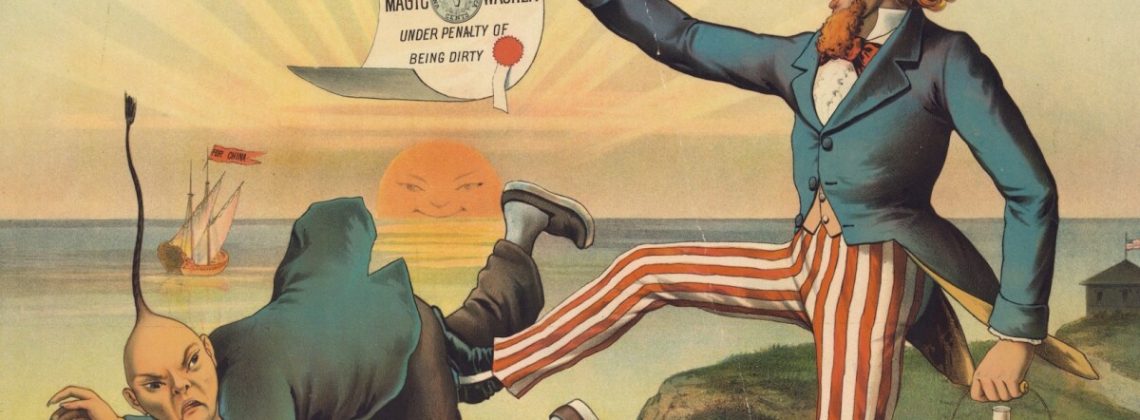
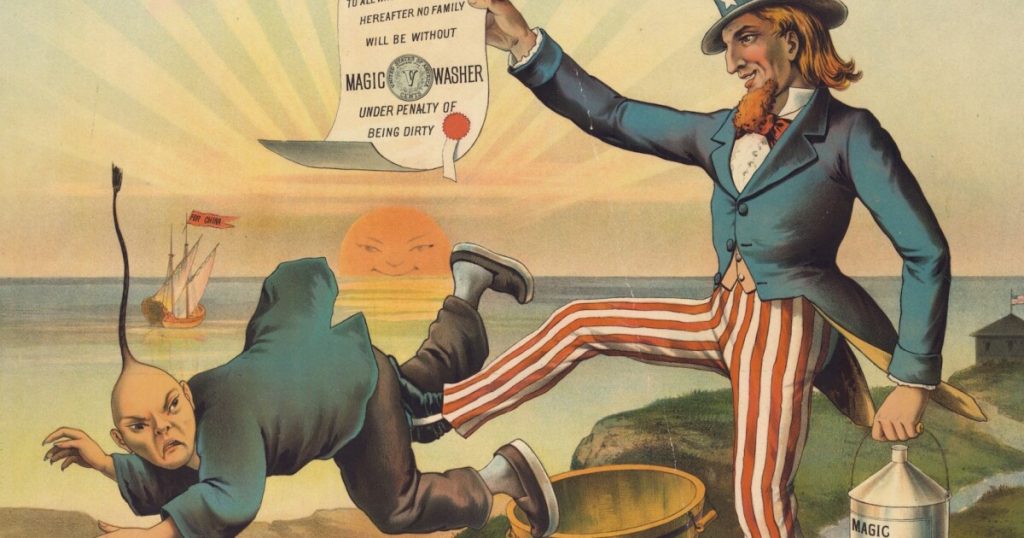
Until the 1870s, there were no federal laws enforced to restrict immigration. But rising unemployment in California during that decade led white workers to accuse Chinese immigrants of stealing jobs, depressing wages and bringing women to the United States for prostitution. In 1875, Congress passed the Page Act to curtail Chinese migration and went even further in 1882, passing the Chinese Exclusion Act, which banned most Chinese immigrants. These laws, alongside the racist sentiments that led to their passage, effectively legitimized vigilante violence against Chinese communities, including the Wyoming Territory’s Rock Springs Massacre of 1885, during which white miners killed 28 Chinese workers, injured 15 more and destroyed the local Chinatown.
The Chinese Exclusion Act threatened the very foundation of American citizenship as defined by the 14th Amendment, which establishes that “all persons born or naturalized in the United States” are citizens. Wong Kim Ark was born in San Francisco in 1873 to Chinese parents. After traveling to China in 1894, border officials barred him from entering the United States, insisting he was not a citizen. The case made its way to the Supreme Court, which ruled in United States v. Wong Kim Ark that the Constitution granted birthright citizenship to all individuals born on U.S. soil, regardless of parental origin.
Citizenship is not conditional. After all, if citizenship can be challenged based on race, ancestry or political will, then no one’s status is truly secure. Yet this is exactly what Mr. Trump’s promise to end birthright citizenship would do.
Banning Chinese immigration laid the groundwork for further restrictions. At the end of the 19th century, increasing numbers of Eastern and Southern Europeans began to arrive in the United States. American policymakers worried that these new arrivals, who were deemed racially inferior, would blemish the nation’s racial stock. To address these concerns, Congress passed the Immigration Act of 1924, which introduced national origin quotas that gave preference to Northern and Western Europeans and almost completely barred Asians from entering.
Read the rest here.