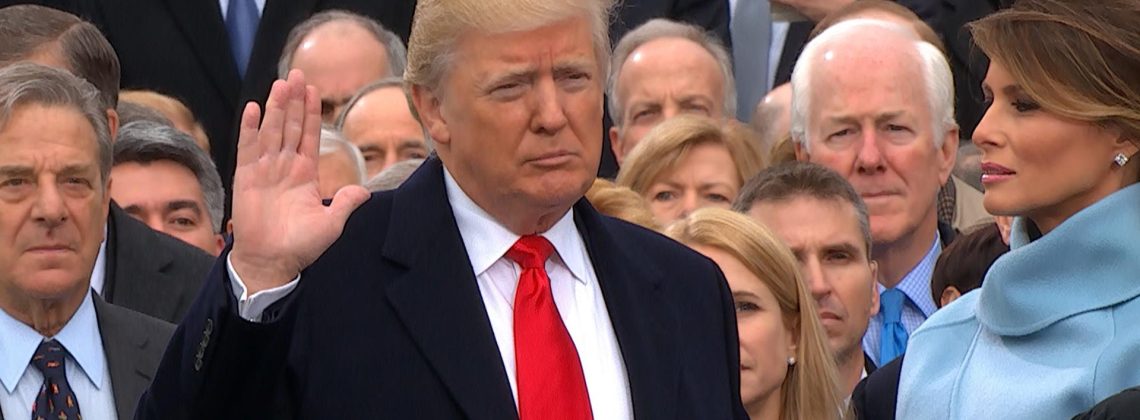
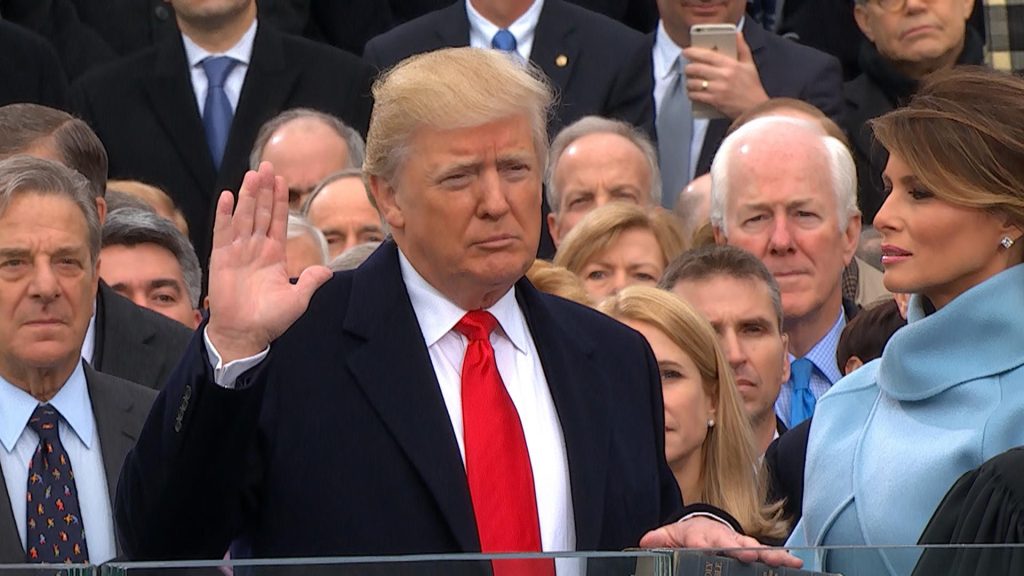
On Monday, Donald Trump will put his hand on the Bible and say: “I do solemnly swear (or affirm) that I will faithfully execute the Office of President of the United States, and will to the best of my Ability preserve, protect and defend the Constitution of the United States.”
Over at The Washington Post, historian Kevin Butterfield puts this oath into historical context. Here is a taste:
In short, the framers believed that oaths mattered, and they were the only ones who could write it. No one wanted an all-powerful executive, but the idea of making the president “the mere creature of the Legislature,” in the words of Mason, was a “violation of the fundamental principle of good government.” So Congress could not write the president’s oath — this one or any other. As Thomas Jefferson would write as he was preparing to take the oath in 1801, “it may be questionable whether the legislature can require any new oath from the president.” They have never tried.
Washington first took the oath on a balcony in New York in 1789, to a “Long Live George Washington” from Chancellor Robert Livingston and general huzzahs. He did not add “so help me God” — Chester A. Arthur was the first to do that.
The beginning of Washington’s second term made the oath what it is today. Initially unsure whether it should even be taken in public, he was eventually persuaded by his Cabinet to do so. In the Senate chamber, he stood to give what we now call his Second Inaugural Address. It will forever be the shortest one. In four sentences, he did little more than explain to Congress why he had chosen to take the oath “in your presence.”
Should anyone find that he had “in any instance, violated, willingly or knowingly, the injunction” of the oath, Washington said, they should hold him accountable. “Constitutional punishment” (impeachment) was, he said, one consequence. But he hoped, too, to be “be subject to the upbraidings of all who are now witnesses of the present solemn ceremony.”
Washington understood why the president’s oath was set aside for that singular office. In the words of Supreme Court Justice Joseph Story a half-century later, the oath “results from the plain right of society to require some guaranty” that an officeholder “will be conscientious in the discharge of his duty.”
Nearly a quarter of a millennium later, some surely have doubts about the binding power of a spoken oath. But to those who drafted the Constitution, the oath seemed to be history’s best attempt at trust and accountability. Enshrined in the Constitution for reasons that mattered deeply to the Founding generation, it will always be there.
Read the entire piece here.