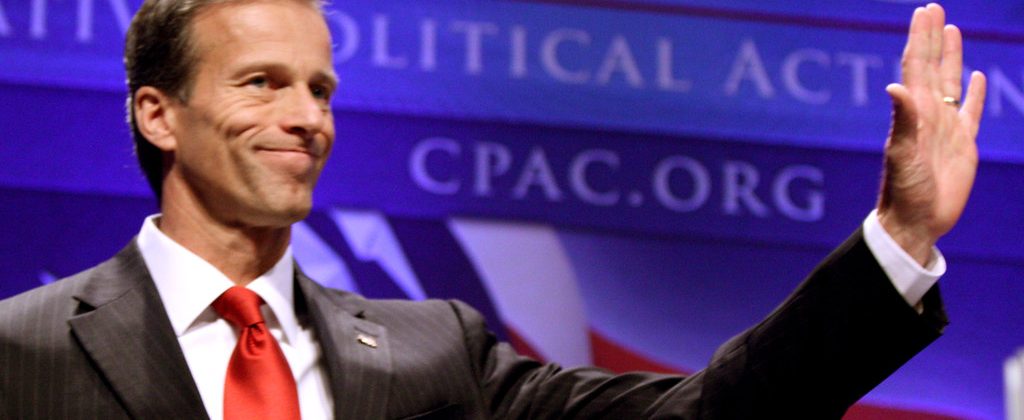
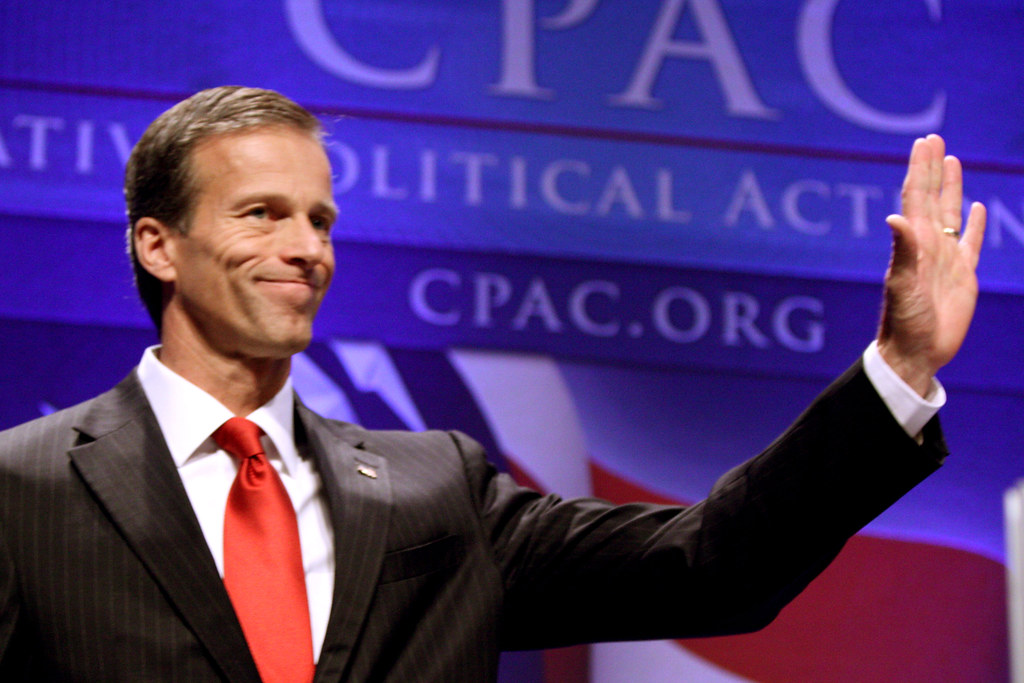
I must admit that I breathed a small sigh of relief when I heard that GOP Senators chose John Thune to lead them. Thune defeated John Cornyn of Texas and Rick Scott of Florida. The latter was Trump’s pick. So consider this a loss for the president-elect.
Only time will tell if Thune stands up to Trump. I hope he defends the separation of powers by making sure that the Senate is a check on presidential power. I am not optimistic about that possibility, but I do have a small amount of hope that the Biola University graduate from South Dakota will do the right thing. He can start by voting against Trump’s nominees for Secretary of Defense (Pete Hegseth) and Attorney General (Matt Gaetz).
Here is Russell Berman at The Atlantic:
The tests will begin immediately. Will Republicans confirm Trump’s choice of Pete Hegseth, a military veteran and Fox News host with no experience in government leadership, to be defense secretary? Or Representative Matt Gaetz of Florida as attorney general? The possible nominations of Robert F. Kennedy Jr. and Kash Patel to senior roles could similarly force Thune to decide how much deference he wants to give the new president.
A GOP leader’s distaste for Trump doesn’t always translate to legislative conflict. McConnell was unsparing in his criticism of Trump after January 6; he told his biographer Michael Tackett that Trump was “a sleazeball” and that the assault on the Capitol demonstrated his “complete unfitness for office.” Yet as majority leader, McConnell rarely bucked Trump, blocking few nominees and ensuring the president’s ability to reshape the federal judiciary and the Supreme Court. He voted to acquit Trump of his second impeachment, a decision that helped enable Trump’s political comeback.
Thune is likely to be even more accommodating as Trump prepares to reassume the presidency. “This Republican team is united,” Thune told reporters after defeating Scott and Senator John Cornyn of Texas in the leadership election. “We have a mandate from the American people, a mandate not only to clean up the mess left by the Biden-Harris-Schumer agenda, but also to deliver on President Trump’s priorities.” He signaled support for Trump’s nominees so far—although Gaetz’s selection had yet to be announced—and vowed to overcome Democratic opposition to confirming them.
Yet if Thune is no longer a Trump critic, he isn’t a loyalist either. Socially and fiscally conservative, he began his political ascent when most Republicans were still devoted to the legacy of Ronald Reagan. Thune first won his Senate seat in 2004 by defeating the Democratic leader at the time, Tom Daschle, and was seen as a possible presidential contender. But he devoted himself to the Senate instead, and his bid to succeed McConnell was years in the making. During his press conference today, Thune reaffirmed his commitment to maintaining the Senate’s 60-vote threshold for overcoming a legislative filibuster—a McConnell priority that Trump frequently complained about during his first term. He also declined to immediately agree to Trump’s demand that the Senate allow him to install his nominees when Congress is not in session.
Read the entire piece here.
Who is Thune? Here is a taste of my current manuscript, tentatively titled “Roads Not Taken: Evangelicals and Politics in America, 1998-2006”:
He was a devout evangelical Christian. His parents had helped found the non-denominational Community Bible Church in Murdo, South Dakota and Thune had followed his four siblings to BIOLA University. Formerly known as the Bible Institute of Los Angeles, BIOLA was a flagship West coast evangelical school. Thune enrolled in 1979 on a basketball scholarship.
Upon returning to South Dakota to start his political career, he became known for his strong conservative convictions on social issues, especially his pro-life view of abortion and his commitment to traditional marriage…In a February 2005 interview with Christianity Today, Thune talked about the impact that his BIOLA Bible courses and “Christian Worldview” had on his career, describing what he learned as a “great foundation” for politics. He referenced Colorado Senator Bill Armstrong, a favorite of the Christian Right, and Charles Colson, as two people who inspired him to pursue “public service.” He also mentioned radio preacher Chuck Swindoll, adding that he used the popular evangelical writer and speaker’s curriculum when he taught Sunday School in church. Thune saw politics as a Christian calling. “We have to be in the arena contending for the truth,” he told Christianity Today, “but we Christians should be doing it in the right spirit–a spirit of love, concern and compassion. I think that’s how you can sometimes take the partisan edge off, with just the style and the way you go about the work that you do and the positions that you take, and the statements and beliefs that you share with the public.”