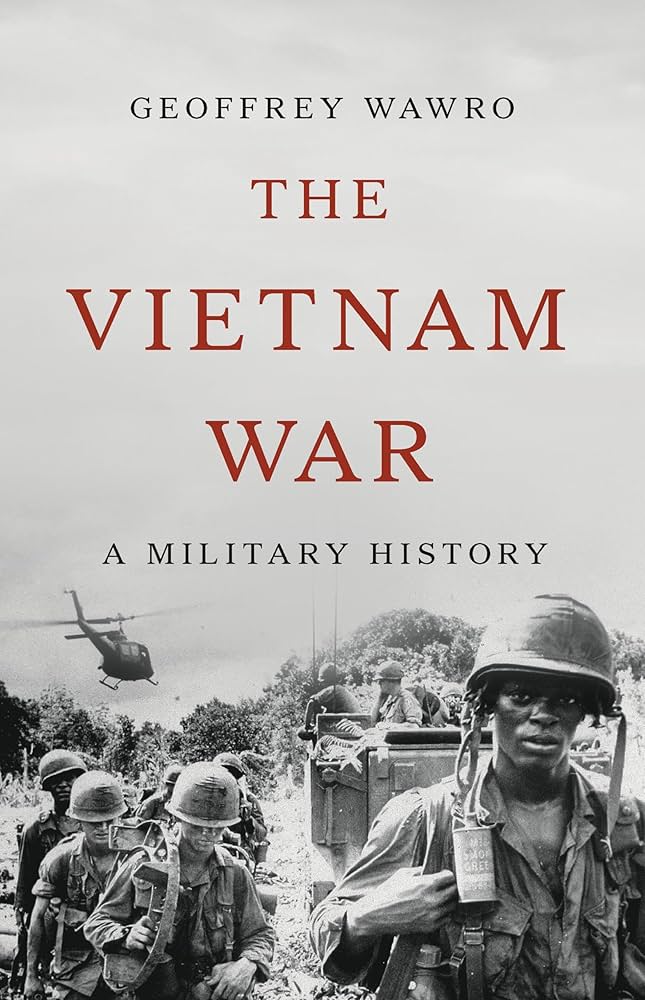
Geoffrey Wawro is University Distinguished Research Professor of History and Director of the Military History Center at the University of North Texas. This interview is based on his new book, The Vietnam War: A Military History (Basic Books, 2024).
JF: What led you to write The Vietnam War?
GW: I wanted to write a complete military history of the Vietnam War, sourced in archives, that gives equal coverage to the pre-and post-1968 halves of the war, to the Nixon war no less than the LBJ war.
JF: In 2 sentences, what is the argument of The Vietnam War?
GW: The book argues that the war was embarked on largely for domestic-political reasons —to exhibit “toughness” against “international communism.” Ultimately, the war was unwinnable owing to economic and political limits in the United States and the gulf between North Vietnam’s unlimited aims and means and America’s sharply limited ones.
JF: Why do we need to read The Vietnam War?
GW: It describes the futility of America’s first “forever war,” and showcases the insufficiency of military-technological approaches to complex foreign crises. It details the military operations 1965-75 and explains how the United States, though “never losing a battle,” nevertheless lost the war.
JF: Why and when did you become an American historian?
GW: I began as a European historian, but the rise of the United States to world power in the late 19th/early 20th century took me there, most notably in my books Quicksand, Sons of Freedom, and The Vietnam War.
JF: What is your next project?
GW: TBD!
JF: Thanks, Geoffrey!
Thanks for this, going on my list.