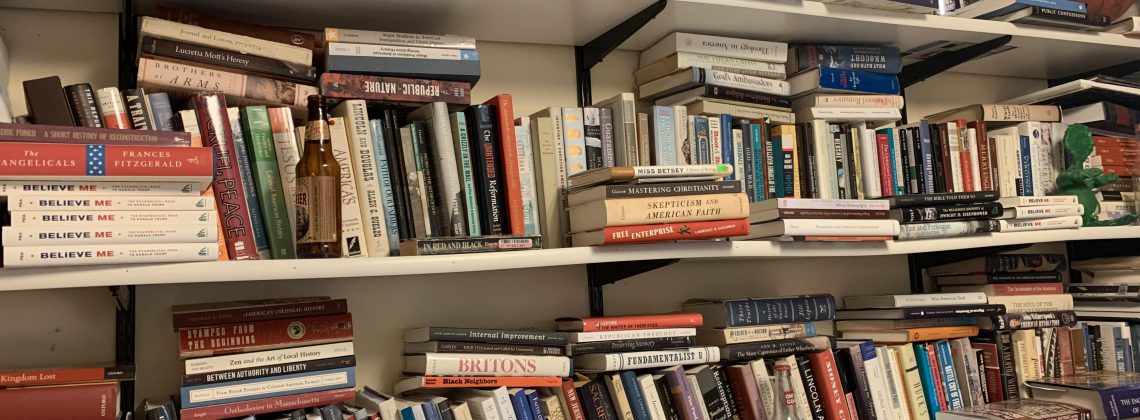

In a beautiful piece at The New York Times, Margaret Renkl wonders what to do with all the books that her husband, an English teacher, brought home after he retired. Here is a taste:
My husband, Haywood, reached retirement age this summer, but instead of actually retiring, he decided to stay on and teach part time. I work from home, alone in a silent house, and I am thrilled to have more time with the person I like best in all the world. The only downside was his stuff. When it’s time to give up his classroom, what does a veteran English teacher do with 37 years’ worth of posters and three-ring binders and author photos and various bringing-literature-to-life aids? What does he do with all the books?
Whatever teaching materials his colleagues couldn’t use, Haywood brought home, along with all the books, to a house already piled to the rafters with the belongings we inherited when our parents died. It was no big deal to hang the pictures in my husband’s home office, to lean the “Moby Dick”-era harpoon in a corner, but the books stymied us. Every bookcase in the house — and there are a lot of bookcases in this house — was already stuffed beyond budging.
One son and his sweetheart carried off three large cartons, mostly duplicates of books we already owned. The rest of the classroom books sat in boxes while we tried to figure out what to do with them.
People have been arguing that print is dead, or about to be dead, for at least half my husband’s teaching career. It is not dead in this house. We write in books. We dogear pages and underline passages and draw little stars in the margins. To read a book after my husband has read it is to have a window into his curious and wide-ranging mind.
Read the rest here.
I have been giving them to students, but barely made a dent. Two semesters to go now…ain’t bringing (most of) them home.