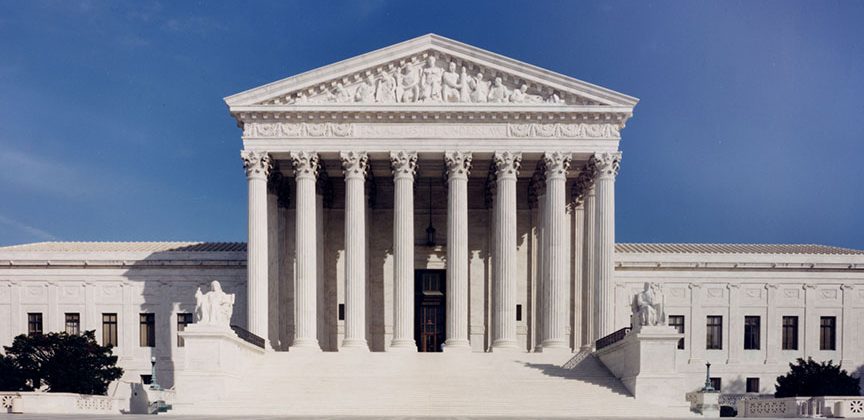
When the Colorado–14th Amendment ballot case broke, Washington Post columnist and public intellectual E.J. Dionne was skeptical. He was among those who thought that Trump should stay on the ballot in Colorado and let the people decide whether he should be president again.
But historians Jill Lepore, David Blight, Drew Gilpin Faust, John Fabian Witt, James McPherson, Nell Irvin Painter, and others changed his mind. Here is a taste of Dionne’s piece “Why I changed my mind and think Trump should be thrown off the ballot.”:
“…the more I read and listened, the clearer it became that Section 3 was directed against precisely the conduct Trump engaged in. Its purpose is to protect the republic from those who would shred the Constitution and destroy our system of self-government. What Trump did in advance of the attack on the Capitol and on Jan. 6, 2021, legally disqualifies him from the presidency.
The record is clear that the legislators who wrote and enacted the amendment in the wake of the Civil War were not just thinking of the Confederacy’s leaders but also of “the leaders of any rebellion hereafter to come.”
Those are the words of John B. Henderson, a Republican senator from Missouri, when he cast his vote for the amendment in 1866. They are recorded in a powerful amicus brief filed with the Supreme Court by a distinguished group of historians of the era: Jill Lepore, David Blight, Drew Gilpin Faust and John Fabian Witt.
The amendment’s authors, they argue, “hoped not only to prevent a resurgence of secessionism but also to protect future generations against insurrectionism.” It was intended “to bar anyone who has betrayed an oath to uphold the Constitution from becoming President of the United States.”
They back up these assertions with a compelling 34-page account of what the framers of the amendment intended and why they wrote it as they did. The essay should encourage conservatives on the Supreme Court, which hears the case on Thursday, to ponder words they love: “originalism” and “textualism.”
Other historically minded briefs made it harder for me to stick with my earlier, prudent view. A group of 25 historians, including James McPherson, the Civil War’s premier chronicler, and Nell Irvin Painter, a specialist in Black and Southern history, cite the congressional debate on Section 3 to show that it plainly applies to the office of the president. They offer clear evidence that implementing the section “did not require additional acts of Congress,” as some defenders of Trump claim.
Sherrilyn Ifill, a Howard Law School professor and former president of the NAACP Legal Defense Fund, shows how the clause to disqualify insurrectionists is closely linked to the 14th Amendment’s core purpose, “a bold and expansive promise of citizenship for Black people.” Its framers were preoccupied with the “ongoing resistance to full Black citizenship by southern states” and feared that “Black men who had been loyal to the Union … would be disenfranchised, while disloyal white former Confederates would be rewarded with the vote.”
Read the entire piece here. The Supreme Court will hear arguments on the Colorado ballot case on Thursday.