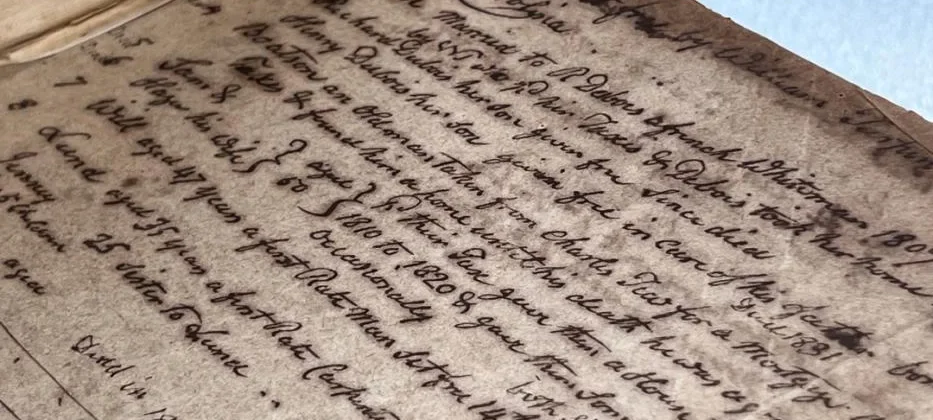
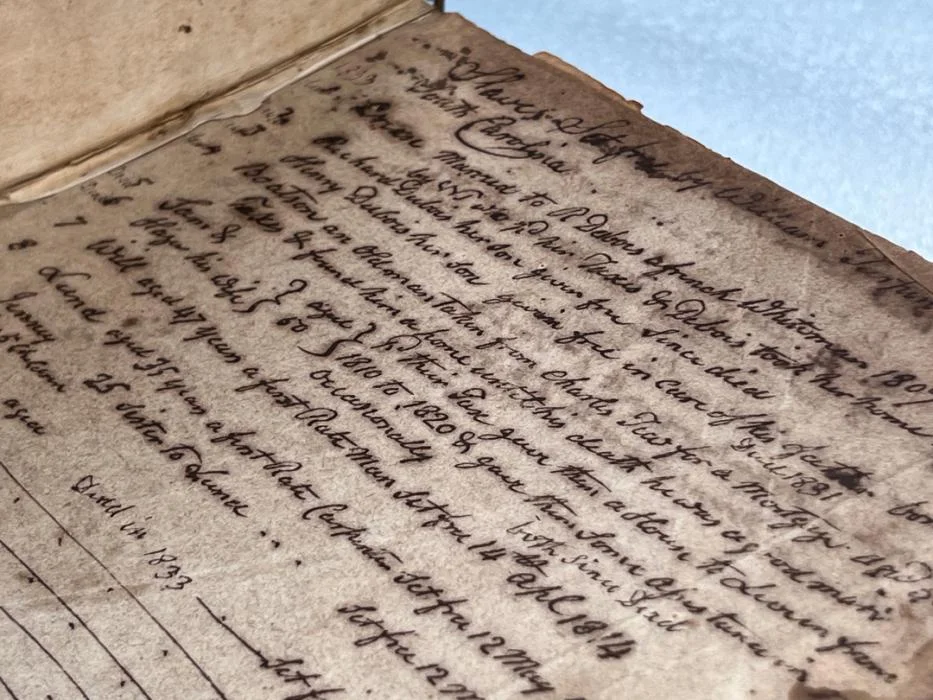
The South Carolina State Museum recently acquired the personal Bible of enslaver turned abolitionist William Turpin. Historians David Dangerfield (University of South Carolina-Salkehatchie) and Ramon Jackson (South Carolina State Museum) tell us more at Christianity Today:
At first glance, William Turpin and his business partner, Thomas Wadsworth, appeared to be like most other prestigious and powerful white men in late 18th-century South Carolina. They were successful Charleston merchants, had business interests across the state, got involved in state politics, and enslaved numerous human beings. Nothing about them seemed out of the ordinary.
But, quietly, these two men changed their minds about slavery. They became committed abolitionists and worked to free dozens of enslaved people across South Carolina. When most wealthy, white Carolinians were increasingly committed to slavery and defending it as a Christian institution, Turpin and Wadsworth were compelled by their convictions to break the shackles they had placed on dozens of men and women.
In an era when the Bible was edited so that enslaved people wouldn’t get the idea that God cared about their freedom, Turpin left a secret record of emancipation in a copy of the Scriptures, which is now in the South Carolina State Museum.
Perhaps it’s not surprising that this story of faith and freedom is mostly unknown. The two men were, after all, working not to attract attention.
Neither had deep roots in Charleston or close familial ties to its storied white “planter” dynasties. Turpin’s family was originally from Rhode Island, and Wadsworth was a native of Massachusetts who moved to South Carolina only shortly after the American Revolution. Both had public careers and served in the South Carolina Legislature, but their political profiles were not particularly high. Neither of them appeared to give any of their legislative colleagues the sense that they were developing strong, countercultural opinions on one of the most explosive issues of the day.
Wadsworth served in the South Carolina House of Representatives from 1791 to 1797. He represented Laurens District, near Greenville.
Turpin was a state senator representing the parish that comprised the city of Charleston in 1809. Before that, Turpin had served in various public offices, most notably as a commissioner for the East Bay Lottery. This was the same East Bay Lottery that an enslaved man named Telemaque won in 1799. After buying his own freedom, Telemaque changed his name to Denmark Vesey.
The two men were business partners. Their business interests led them to acquire land across South Carolina’s upcountry at what turned out to be just the right time for financial success. In the 1780s, they received several land grants for thousands of acres in both the Ninety-Six and Orangeburg districts. When the cotton gin was invented a few years later, short-staple cotton—which grew well in South Carolina’s upcountry—became a very profitable commodity. Cotton was cultivated with enslaved labor, so the cotton boom also drove up the price of enslaved people.
Read the rest here.
Here is Dangerfield and Jackson discussing the acquisition: