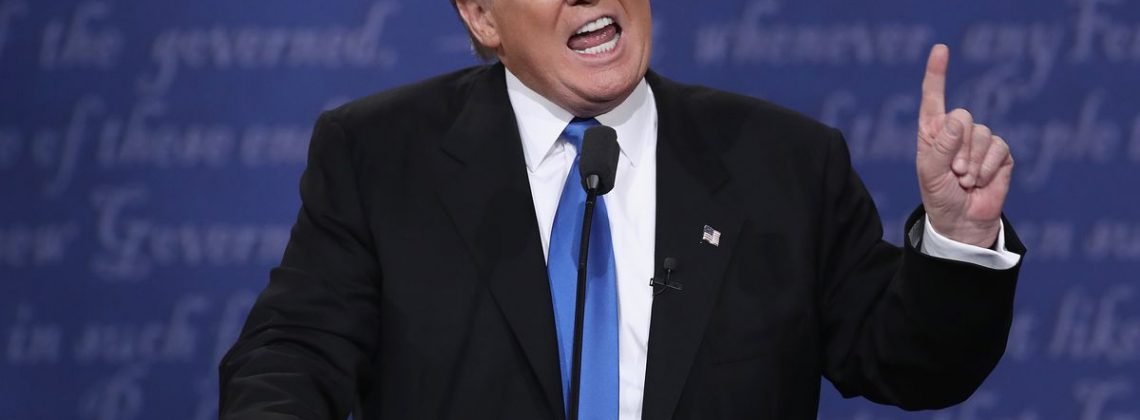

This is a question that Joe Mathews tackles today in the context of an argument for removing Donald Trump from the ballot in 2024.
Here is a taste of his piece at Zocalo Public Square
I was in favor of keeping Donald Trump’s name on the presidential ballot in California.
Until I went to Berlin this fall.
At a Saturday conference on German election law—if you haven’t noticed, your columnist is a democracy nerd—I met an entrepreneur named Gregor Hackmack. He’s so committed to democracy and participation that he launched a non-partisan online platform last year to enable dialogue between everyday people and elected representatives.
But now he’s organizing a petition to ban Germany’s second most popular political party—the far-right AfD, or Alternative for Democracy—from participating in elections.
Hackmack is wrestling with one of the hardest questions in democracy: When, if ever, can a democracy exclude anti-democratic politicians and parties from democratic elections?
The question is urgent because around the world democracy is threatened by authoritarian leaders who won office through democratic elections. Some of the world’s most oppressive governments—including those in Russia, Iran, Venezuela, Egypt, Turkey, and Tunisia—are led by men who came to power through voting.
It’s also a question now forced upon Americans by Trump’s return bid for the White House.
Blocking candidates or parties from elections doesn’t come naturally to democratically minded people. Nor should it—it’s a despot move. Autocracies and dictatorships routinely maintain and extend their power by blocking opposition figures from standing for office, such as when the Chinese government banned pro-democracy candidates in Hong Kong’s 2020 vote.
So why and how could we justify blocking candidates? One answer to that question, now getting attention in declining democracies, might be called the Democratic Self-Defense Exception: You should bar parties and politicians only when they threaten democracy itself.
The self-defense exception is the logic behind current legal efforts by pro-democracy nonprofits and some to remove Trump from 2024 ballots in most states.
It is also why it makes sense for people around the world to examine how Germany, where the Nazi party took power through elections, reckons with those who threaten its democracy.
In Germany, AfD is the political party that poses a danger to democracy—and society. AfD partisans and officials make threats against democratically elected officials. One party leader has expressed pride in Germany’s “World War II accomplishments.” The party embraces racist policies towards migrants, and pledges mass deportation and cancelation of citizenship for minority groups.
Yet since its founding in 2013, AfD has secured support from one-third of voters in economically-marginalized eastern parts of the country, and from 21% of respondents in national polls, the second-highest of any party.
Germans like Hackmack are arguing for banning the party because such racism and anti-migrant policies violate the German Basic Law, the country’s governing document, which was developed after World War II with the assistance of American political scientists. Specifically, AfD’s critics say the party aims to undermine the democratic order as expressed in Article 1 of the Basic Law, which calls human rights and human dignity “inviolable.”
They also point to Article 21, which specifically provides for banning parties determined to be “unconstitutional” because they do not “conform to democratic principles,” “seek to undermine or abolish the free democratic basic order” or “endanger the existence of the Federal Republic of Germany.” Germany’s federal constitutional court gets the final say on banning a party.
To those who suggest that banning AfD would only make it more violent and dangerous to democracy, supporters of the ban respond emphatically. They state that Germans’ expectation of heightened violence is itself reason to keep the party off the ballot: “The democratic process is undermined if it takes place permanently under the sword of Damocles, that a group with real power options wants to torpedo precisely this process,” wrote the constitutional law expert Klaus Ferdinand Gärditz in support of the ban.
And this:
Here in the U.S., Trump represents one pressing threat to democracy. The former president led an insurrection after losing the 2020 election, and has announced plans for a second presidency that sounds like dictatorship, including mass firings of civil service workers and prosecutions and even executions of Trump’s political opponents (whom he calls “vermin”).
Seeing how Germans are re-examining the Basic Law because of AfD’s threat to their democracy, I understood better why Americans are rereading the U.S. Constitution because of Trump’s threat here. Various interest groups and voters have filed suits in 28 states seeking to bar the former president from primary ballots. Trump’s conservative critics, including law professors and judges, are pushing hardest to boot him from the ballot.
“A president who tried to use force and fraud to stay in power after losing an election should not be allowed to wield the power of office ever again,” writes George Mason law professor Ilya Somin. “And we need not and should not rely on the democratic process alone to combat such dangers.”
Read the rest here.