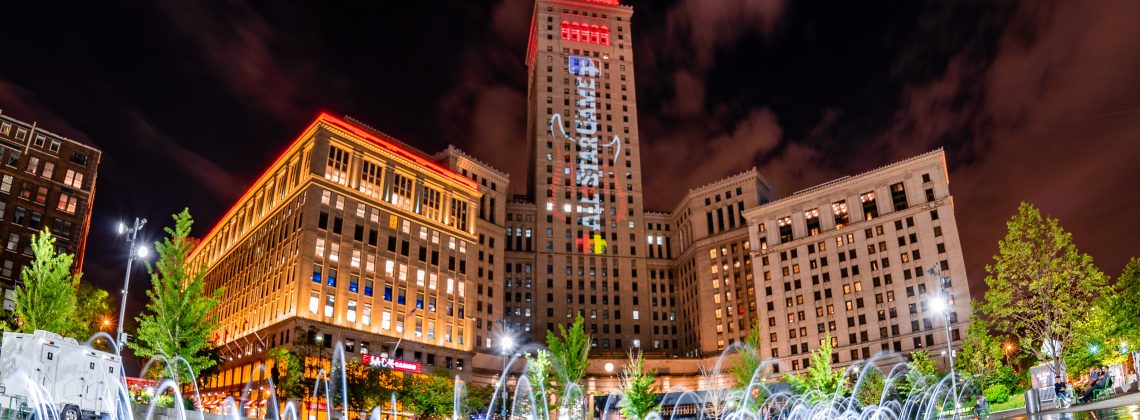
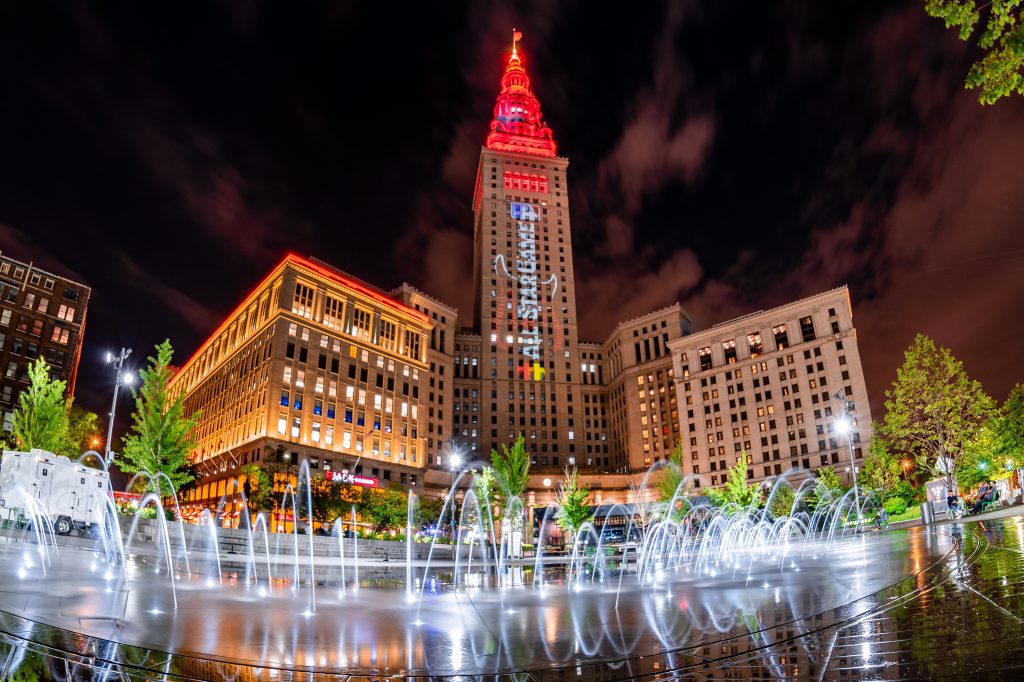
Check out The Washington Post‘s piece on the transformation of Cleveland, Ohio: “America’s best example of turning around a dying downtown.” It appears Cleveland is no longer the “mistake by the lake”:
A taste:
Empty downtown office buildings pose a formidable challenge to cities such as San Francisco and D.C. It doesn’t help that construction costs have surged and that interest rates are at a two-decade high. Real estate investments are largely on hold as developers wait for prices to fall. But Cleveland offers hope — and a useful model.
Our year-long project studying how to revive downtowns has identified three keys to success: First, to focus on a few blocks at a time (what urban planners call a “node”). Second, to make it as easy as possible to convert old office towers for new uses, via tax incentives and expedited permitting. Third, to offer unique amenities for residents, workers and tourists. Cleveland did all three in the area around Public Square.
Former mayor Frank Jackson, who served from 2006 to 2022, says when he entered office, “you could roll a bowling ball downtown after work and you wouldn’t hit anybody. It was a ghost town.” Cleveland epitomized the Rust Belt; businesses were leaving, and people were fleeing. Initial attempts at revival focused on a new convention center, spruced-up sports stadiums and a downtown casino. But something was missing: a great public space for everyone to gather.
The push to renovate Public Square began in 2011. Anthony Coyne, a lawyer who chaired the city’s Group Plan Commission, carried around a PowerPoint deck with a vision for a square as vibrant — and green — as New York City’s Bryant Park or Chicago’s Millennium Park. He showed it to any business executive, civic leader and philanthropist who would listen.
The square started off in the 1800s as a pasture for animals. By the early 20th century, it had become a bustling shopping center. Many remember visiting department stores there such as Higbee’s and the May. By the late 20th century, high-rise office towers took over. The city put two big roads through Public Square that chopped the park into four tiny quadrants. The overarching goal was to make it easier for workers to commute from the suburbs. It typified what so many American downtowns became in the past 40 years: functional but sterile.
When Cleveland won the bid to host the 2016 Republican National Convention, the city rushed to show a rejuvenated face to the world. It completed a $50 million renovation of Public Square, partly funded by donations. The result was a well-lit park that removed most traffic lanes. Half of the square is devoted to a big grassy area with many trees and benches. The other side of the square has a cafe, Civil War historical monument and an ice rink (which turns into a splash pad in the summer).
The makeover had an immediate impact. Families brought kids to play in the water park. Office workers and students came to sit on benches and grab lunch at REBoL, a new organic eatery on the square. Rallies and festivals such as “Pride in CLE” filled the square. And real estate developers began to buy the surrounding (mostly vacant) office buildings with a plan to turn them into rental apartments.
Read the rest here. The photos alone make this piece worth your time.