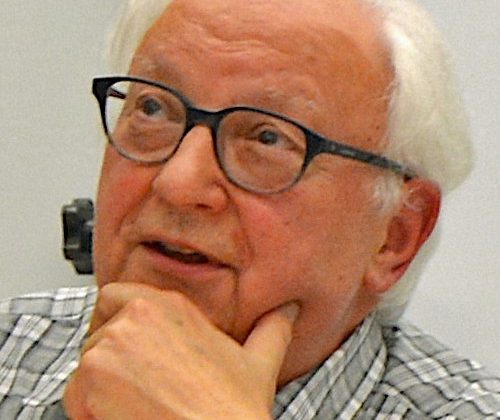
French philosopher Étienne Balibar does not think so. Here is a taste of his interview with Jacobin:
The idea of liberty has itself been contested and challenged since its very origins in modern times because the very notion of “liberty” is a divided one, or what British analytic philosopher W. B. Gallie very interestingly called an “essentially contested concept.” Such concepts, which always have a philosophical or metaphysical dimension as well as immediate political relevance, can never become unified or subsumed under a single, universally accepted definition. They are the site of permanent opposition.
The conflict in politics is thus not between those who valorize liberty and those who neglect it or choose another principle. It is between antithetic concepts of liberty itself. This is also not just the classic distinction between a “negative” concept and a “positive” concept of freedom, but rather an individualistic concept — preferred by the liberal tradition — and a democratic concept, which involves a collective agency. In the latter, citizens “liberate” each other or grant themselves freedom reciprocally.
However, it has to be admitted that a certain tradition on the Left — especially under the influence of a “narrow” reading of some of [Karl] Marx’s texts — endorsed the idea that “liberty” is a “bourgeois” value per se, because it would conflate economic liberty (free competition, etc.) based on private property with political or juridical “liberties” (i.e., rights), which are deemed purely “formal.” This is historically wrong and theoretically based on a basic confusion, but it has had lasting and catastrophic effects on the Left. In fact, the Right has been able to capitalize on that confusion.
Similar considerations could be proposed about the idea of “protection” or “security,” which is also a divided one. The experience of the pandemic generated interesting developments within these debates. There has been a debate about whether we should regard as antidemocratic the restriction measures that were “imposed” by the state on individual or collective freedoms (such as freedom of circulation) as “protections” against the dissemination of the virus.
I will admit that coercive measures such as isolation, quarantine, lockdowns, and mandatory vaccination ought to be democratically discussed with the society, the doctors, and the various levels of government instead of being imposed in an authoritarian manner. Even if we admit that a general rule must exist, there is still a real danger in the future that sanitary controls could become amalgamated with other forms of police surveillance and prolonged beyond necessity. This calls for democratic vigilance and intervention.
Read the entire interview here.