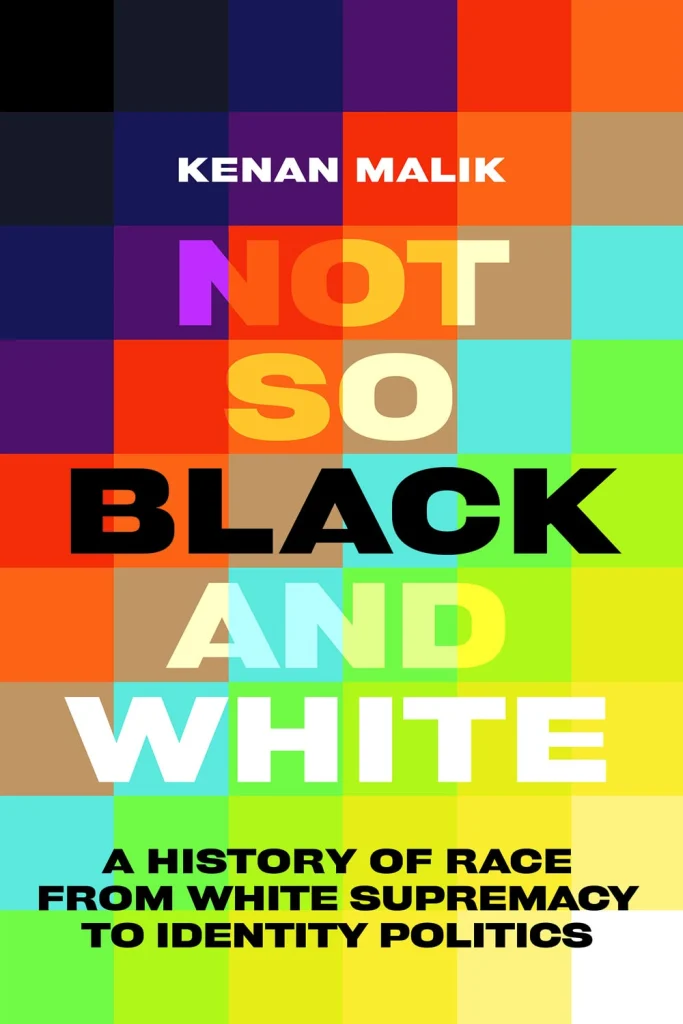
Over at Jacobin, Taj Ali interviews writer Kenan Malik, the author of Not So Black and White: A History of Race from White Supremacy to Identity Politics.
Here is a taste:
TAJ ALI: You discuss the decline of cross-racial class solidarity in your book, with particular reference to the United States. But can you see why a black American growing up today — who understands the history of slavery, witnesses police brutality, and perhaps comes from a segregated community — may find it difficult to transcend an understanding of the world centered primarily on race?
KENAN MALIK: Historically, there have been many strands within African-American struggles that have sought to transcend race. With more identitarian viewpoints now, we often see ourselves in terms of our ethnic or cultural identity rather than understanding that we may have a commonality as working-class people. When we look at the civil rights movement in the United States, we often only look in terms of the postwar years. What we call the civil rights movement resurrected itself in the 1950s. But there is a much longer history to the civil rights movement, and there’s a period of struggle in America that’s often forgotten, which is the interwar years that laid the foundations for the postwar civil rights movement.
What many now call civil rights unionism linked the struggle of black people for equality with the struggle of workers — black and white — for proper wages, conditions, housing, and so on. Much (though not all) of that was lost in the postwar era when the civil rights movement reemerged in the 1950s, partly because of the Cold War. Radicals in trade unions, in the Communist Party, and, more broadly, on the Left, were ostracized and marginalized. In essence, the economic and the political became unstitched.
That was clearer in the post-1980s world where neoliberalism was much more accepting of political equality than of economic equality. Racism still exists, discrimination against women still exists, but nevertheless there is a kind of moral acceptance of equality at that level in a way there isn’t about economic equality.
TAJ ALI: Often when you criticize identity politics, you’re labeled a class reductionist. Identity politics might be seen as divisive, but whether it is racism, sexism, or homophobia, isn’t it easier to discount the importance of identity if you are not negatively impacted by discrimination yourself?
KENAN MALIK: The idea that pointing to the importance of class in our struggles makes one a class reductionist is lazy. Minorities are predominantly working class, and not to see their struggles through the lens of class is to deny the experience and needs of probably the majority of black and Asian people in this country.
Black Lives Matter, for example, in its own words, sees itself as part of a global black family. But the global black family is no more useful a category than the global Muslim Ummah or the claim that all Hindus have a common set of interests. It’s a confected unity that serves largely to obscure divisions within communities and makes the creation of solidarity across racial lines more difficult.
One of the stories I tell in the book is about a sanitation workers’ strike in New Orleans. In May 2020 sanitation workers walked out on strike because of poverty, low wages, and lack of safety equipment during the COVID pandemic, as well as the refusal to recognize the union. Nearly all the workers were black, and so were the employers. As part of its anti-racist drive, New Orleans had outsourced its sanitation work to a black-owned company. The sanitation workers came out on strike three weeks before George Floyd was murdered in Minneapolis. They then remained on strike throughout that summer, and the wave of protests that swept through the United States and the world brought racism and black lives to the forefront of global consciousness.
But Black Lives Matter meant something very different on the two sides of the picket line. There was one black union leader who said at the time that black exploitation does not end because the company is black-owned. And despite that year being the year of Black Lives Matter, the black sanitation workers were forced back to work by September, having won virtually none of the demands. The black employers won; the black workers lost. The idea that there’s a common identity only reinforces the power of black elites and diminishes the voices of black workers. It’s a lazy way of looking at the world, which is very useful for middle-class minorities but does a disservice to the majority of minority people who happen to be working class.
KENAN MALIK: During Jim Crow in the United States, class divisions were there among black Americans, but they were pretty weak. Today, they’re stronger. Everything from the way the police treat people to incarceration rates is as divided by class as by race. Black Americans are disproportionately killed by police, somewhere between two to three times the figure for whites. But paradoxically, that’s not just a racial issue. That’s because the best marker for police brutality is not race, but income level. If you look at poor areas, you’re more likely to see people [there] suffer police brutality and killings than [in] richer areas. Racism has ensured that African Americans are disproportionately working class and poor. The disproportionality in police killings comes in large part from that. Over 50 percent of people killed by the police are white, and most of them are working class.
If you take incarceration rates and look at each income level, the incarceration rates of blacks and whites aren’t that different. But there are huge differences across income levels; and, as you would expect, because black Americans are disproportionately working class, so again they face disproportionate levels of incarceration. If you’re wealthy and black, you are far less likely to be either killed or to be incarcerated than if you’re poor and white. That’s not class reductionist; that’s recognizing the complexity of the world.
Read the entire interview here.