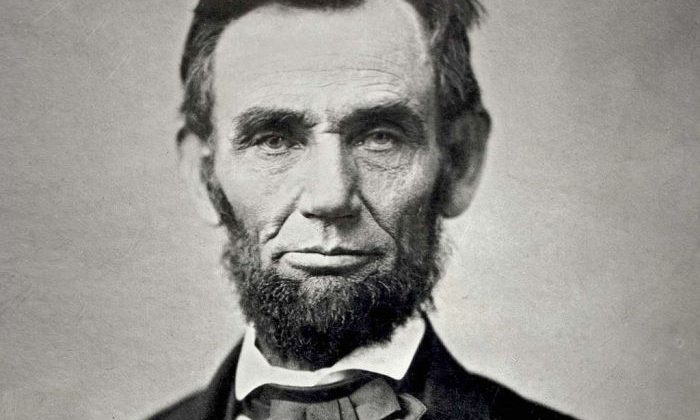

Here is Lincoln scholar Allen Guelzo at National Affairs:
Lincoln’s “idea of democracy” only establishes what democracy is not, or at least what it cannot include. He never offered a more thoroughgoing definition of what democracy is. But it’s not difficult to piece together a larger idea from the vast outpouring of letters, speeches, briefs, notes, and state papers he composed over the course of a public life that lasted 33 years, beginning the day he first announced himself as a candidate for the Illinois state legislature.
Even more than consent, Lincoln understood that democracy is characterized by its location of sovereignty in the body of the people. “This country, with its institutions, belongs to the people who inhabit it,” he announced in his first inaugural address, and the great challenge of the Civil War — even before dealing with slavery — was proving that this was “not an absurdity.” A sovereign people can amend their democracy’s rules, or even overthrow the rulers (if they misbehave), but it cannot suffer a portion of that democracy to walk away over decisions it does not like and call it “peaceful” secession.
Worse still, if a minority in a democracy balks at the policy endorsed by the majority, and then promptly proceeds to break up the polity by armed force, democracy would appear in the eyes of a not-very-sympathetic world to be a farce. “We must settle this question now, whether in a free government the minority have the right to break up the government whenever they choose,” Lincoln explained to his secretary, John Hay, less than a month after the war began. “If we fail it will go far to prove the incapability of the people to govern themselves.”
The way they would govern themselves, however, would be by law. “[R]everence for the laws” was one of Lincoln’s guiding stars, and it ensured that even a majority did not have the authority to enact outrages. Law was the embodiment of reason, the opposite of “the unreasoning, and uncharitable passions, prejudices, and jealousies.” It restrained the state from becoming tyrannical and the people from becoming a mob, and must be applied, Lincoln insisted, as much to the high as to the low. “Allow the President to invade a neighboring nation, whenever he shall deem it necessary,” he complained to William Herndon in 1848, “and you allow him to make war at pleasure.”
By the same token, “whenever the vicious portion of population shall be permitted to gather in bands of hundreds and thousands, and burn churches, ravage and rob provision-stores, throw printing presses into rivers, shoot editors, and hang and burn obnoxious persons at pleasure, and with impunity; depend on it, this Government cannot last.” This did not mean that obedience to law must be unthinking, or that all laws were either perfect or right. “An unconstitutional act is not a law,” Lincoln conceded. But the solution lay not in defiance or subversion of law, but in patience, persuasion, the rational judgment of the courts, and the back and forth of argument in the public forums, especially the newspapers.
Law, however, only ensured stability; it could not inspire participation, and in a democracy, the participation of the citizens was indispensable. “If my own strength should fail,” Lincoln said in 1861, he was confident that he could “fall back upon these masses, who, I think, under any circumstances will not fail.” The principal place of that participation was in elections, since only through elections — through the constant submission of the rulers and the laws to the ruled, and to accountability before the sovereign people — could democracy breathe, learn, and grow. “[T]here can be no successful appeal from the ballot to the bullet,” Lincoln warned, since it was “not bloody bullets, but peaceful ballots” that “give the victory to the right.”
Read the entire piece here.