I hope you get a chance to read historian Jay Green’s piece today at Current. Green writes: “I don’t think there has been a time in my life when the need to secure and reenergize the liberal tradition has been greater. I pray that all who care about a faithful Christian presence in our civic order can awaken and devote themselves to defending it.”
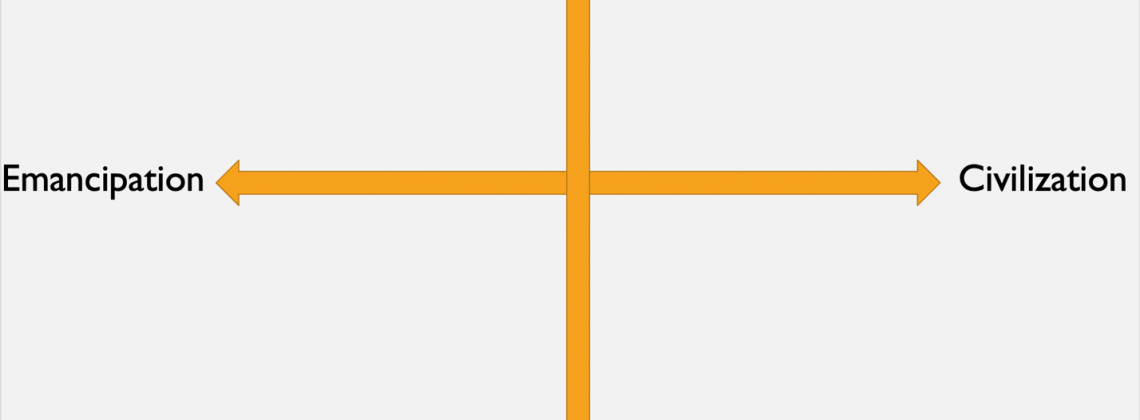
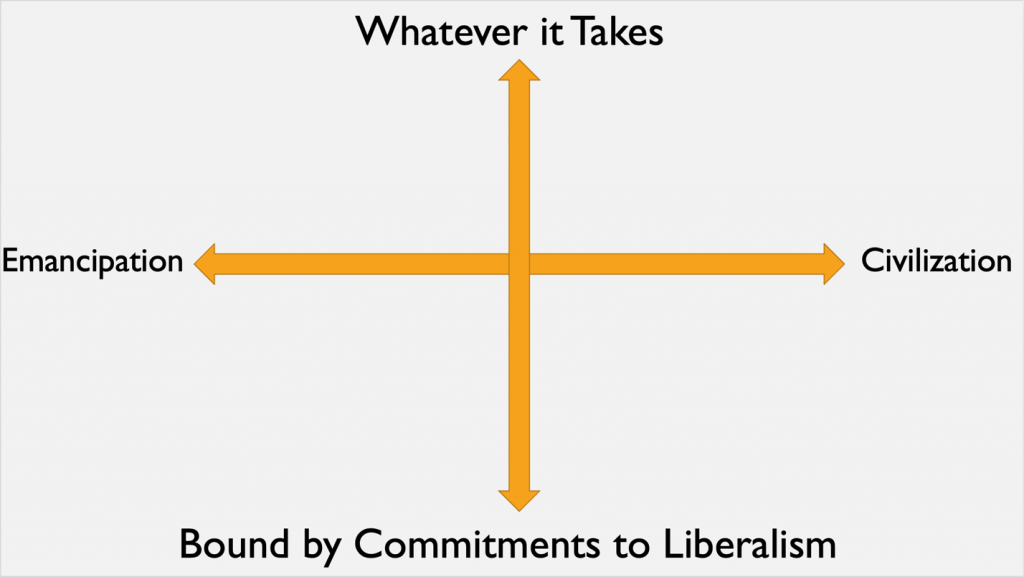
Green identifies four groups that currently occupy the landscape of Christian political engagement. They are:
Civilizational Minimalists: Robert George, Ryan T. Anderson, Kevin DeYoung, Marvin Olasky, Ross Douthat, and Carl Trueman
Emancipatory Minimalists: Timothy Keller, David French, Russell Moore, Tish Harrison Warren, John Inazu, Paul Miller, and Karen Swallow Prior
Emancipatory Maximalists: Kristin Kobes Du Mez, Jemar Tisby, Shane Claiborne, Dante Stewart, and Beth Allison Barr
Civilizational Maximalists: Charlie Kirk, Dinesh D’Souza, Eric Metaxas, Jenna Ellis, Rod Dreher, R.R. Reno, Sohrab Amari, Patrick Deneen, Megan Basham, Albert Mohler, Voddie Baucham, John MacArthur, Owen Strachan, and Doug Wilson.
Here is Green:
I’ve made no special effort to conceal my personal priorities in this essay. I consider myself an Emancipatory Minimalist (with various Civilizational sympathies). I believe that upholding the liberal tradition is essential for the survival of our civic order and the best safeguard for human flourishing for all people. But Maximalists in the United States and around the world are winning the day. The authoritarian impulse on the left and the right is real, it is serious, and it threatens the institutions and our democracy. If there is a center in American public life, I’m not sure how much longer it can hold.
I believe that Christians in America must rediscover and reaffirm our philosophical, moral, and institutional commitments to the liberal tradition. While imperfect, its rules and principles provide the greatest safeguard for justice, civil liberty, and social harmony that human civilization has yet discovered. As believers, our commitment to liberalism also enables us to conform our public practices to the most elemental features of Christian theology. Ideas such as universal human dignity, openness to outsiders, liberty of conscience, the rule of law, and unalienable rights are deeply rooted in the ancient wisdom of the Old and New Testaments. And when we defend these hallmarks of the liberal tradition, we are upholding some of the most treasured features of our faith.
Check out the entire piece here.
Given that Beth Allison Barr has immediately taken grave offense at Green’s characterization of her, I think she’s put a finger on a serious weakness in his schematic. He properly notes that he’s indulged a bit too much in “lumping,” but I think the problem’s more serious: that he completely elides the distinction between critical activism and illiberalism. The names on his “emancipatory maximalist” list are definitely emancipatory, but I’d recognize virtually none of them as adopting an “end justifies the means” stance toward advancing their positions. None of them are authoritarians in any sense resembling their counterparts in the C-Max corner (Strachan, Mohler, Metaxas, et al.) who routinely refuse to recognize those who disagree with them as sisters and brothers in Christ, and to a person present themselves as arbiters of Christian orthodoxy. Of course that’s partly because, being themselves from conservative Christian traditions, those sorted into the E-Max quadrant are well aware of their minority status and can make no pretense to imposing their beliefs or anathematizing heretics. But it’s also because the ones I’m familiar with, at least, share a firm commitment to civil discourse–and Green knows this. For all their disagreements, those sorted as E-Max are closer in temperament to people like Keller, French, Prior–and Green. In the end, Green is engaging in a game of moral equivalence that is deeply unfair.
Thank you, David, for your comments. I think your criticisms are fair. I haven’t read everything Beth has said in response to my piece, but I think I understand the gist of it. I will work on a more formal response. But, for now, let me just say that I regret leaving the implication of a direct moral equivalence among all “maximalist” representatives on this chart. This is almost inevitable in an exercise like this, but I could have done a better job adding greater nuance to my description of the people/groups I named.
A point that I will mostly need to leave for another day is whether those I identified in the E-Max group think of themselves as writing from within the (conservative evangelical) church or from within the academy. Because if they are writing from within the church, yes, I agree with you when you say they are “well aware of their minority status,” and therefore my criticism of them could feel especially unfair (and probably hurtful). But that isn’t exactly how I read them. I ordinarily read them as working members of the academy, and, as such, holding views that are not only mainstream but probably are something closer to articles of faith. Thinking about their perspectives as emerging from an increasingly illiberal academic echo chamber led me to make the observations that ended up in the piece.