
Over at Foreign Policy, Justin Smith asks the same question. Here is a taste:
Outside of the context of drama, in the Roman Republic, personhood was commonly extended to municipalities and voluntary associations. This entailed, among other things, that such collective bodies had rights and responsibilities independent of their individual members. They were not themselves individual human beings, but they donned a mask, so to speak, by which they presented themselves to the world as singular characters.
In the early modern period, with the rise of powerful joint stock companies for the funding and orchestration of global trade, the idea of corporate personhood became common. And soon enough, the conceptual peculiarity of this idea found echoes in the work of some of the greatest philosophical minds. Philosopher Thomas Hobbes, for example, is sensitive to the origins of personhood in drama and claims everything that counts as a person is in some sense an actor. “A person,” the philosopher wrote in his 1651 book, Leviathan, “is he whose words or actions are considered, either as his own, or as representing the words or actions of another man, or of any other thing to whom they are attributed.” From here, Hobbes makes a crucial distinction: “When [these words] are considered as his own, then is he called a natural person: and when they are considered as representing the words and actions of another, then is he a feigned or artificial person.” Among such artificial persons are corporations, such as the East India Company, but also, in Hobbes’s view, the state itself.
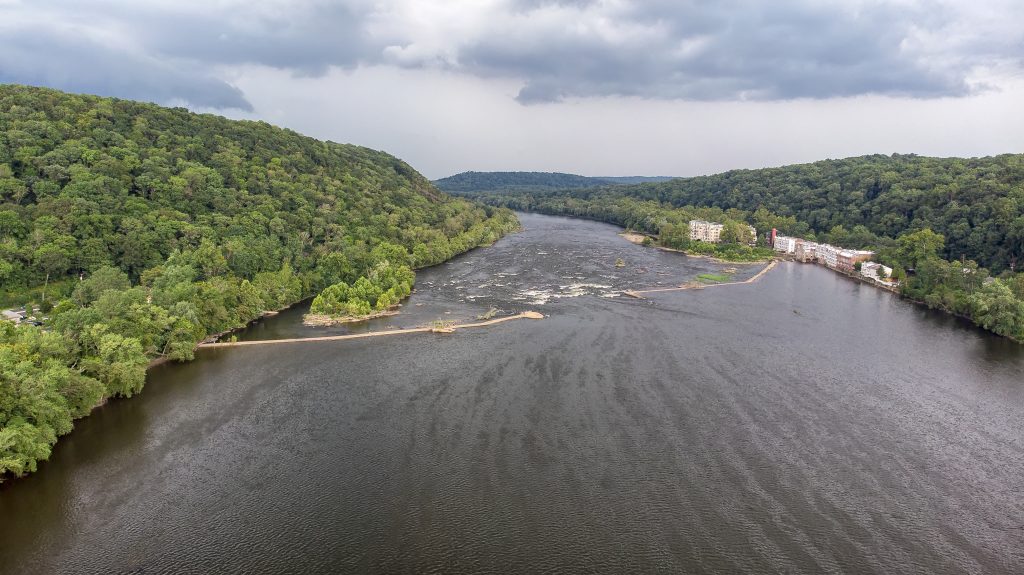
Even when we come to appreciate the long history of nonhuman personhood, however, we are still hardly in a position to understand how it might be extended to rivers. For although rivers are not moral subjects and lack innate capacities in virtue that we attribute to intrinsic (rather than instrumental) moral worth, unlike corporations or states, rivers are evidently not “representing” anyone or anything. They are simply flowing.
Read the entire piece here.
In 2014 I wrote about a piece about American corporations as persons in the wake of Burwell v. Hobby Lobby.