• Skip to main content
  • Skip to secondary menu
  • Current
  • Home
  • About
    • About Current
    • Masthead
  • Podcasts
  • Blogs
    • The Way of Improvement Leads Home
    • The Arena
  • Reviews
  • 🔎
  • Way of Improvement

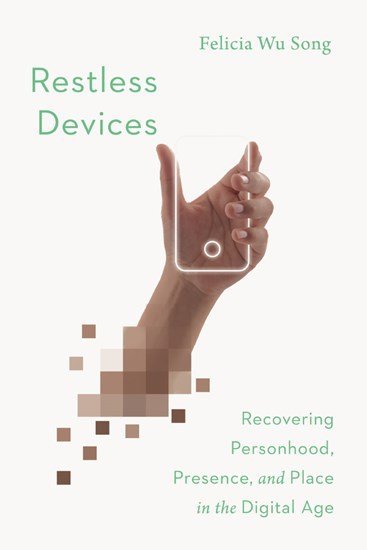
Current Associate Editor Felicia Wu Song publishes Restless Devices: Recovering Personhood, Presence and Place in the Digital Age

John Fea   |  November 30, 2021

Congratulations to Felicia Wu Song, Professor of Sociology at Westmont College and Associate Editor of Current on the publication of Restless Devices: Recovering Personhood, Presence and Place in the Digital Age (InterVarsity Press).

Here is the IVP Press:

We’re being formed by our devices. Today’s digital technologies are designed to captivate our attention and encroach on our boundaries, shaping how we relate to time and space, to ourselves and others, even to God. Our natural longing for relationship makes us vulnerable to the “industrializing” effects of social media. While we enjoy the benefits of digital tech, many of us feel troubled with its power and exhausted by its demands for permanent connectivity. Yet even as we grow disenchanted, attempting to resist the digital “powers that be” might seem like a losing battle.

Sociologist Felicia Wu Song has spent years considering the personal and collective dynamics of digital ecosystems. She combines psychological, neurological, and sociological insights with theological reflection to explore two major questions:

  • What kind of people are we becoming with personal technologies in hand?
  • And who do we really want to be?

Song unpacks the soft tyranny of the digital age, including the values embedded in our apps and the economic systems that drive our habits. She then explores pathways of meaningful resistance that can be found in Christian tradition—especially counter-narratives about human worth, embodiment, relationality, and time—and offers practical experiments for individual and communal change.

In our current digital ecologies, small behavioral shifts are not enough to give us freedom. We need a sober and motivating vision of our prospects to help us imagine what kind of life we hope to live—and how we can get there.

Learn more about he book here.

John Fea
+ postsBio
  • John Fea
    That’s a wrap!
  • John Fea
    The Way of Improvement Leads Home blog has moved
  • John Fea
    Pamela Paul’s last New York Times column
  • John Fea
    Evangelicals and politics roundup: Wisconsin, Cory Booker, spiritual warfare, refugees, and more.
  • John Fea
    Goodbye to a Four-Year Labor of Love
  • John Fea
    Wisconsin sends Trump-Musk a message
  • John Fea
    “Would you want your doctors not to be revisionists?”
  • John Fea
    All four #1 seeds made the Final Four this year. What happened to Cinderella?
  • John Fea
    It’s the last week of CURRENT
  • John Fea
    Sunday night odds and ends
  • John Fea
    Trump’s executive order on American history has little to do with history
  • John Fea
    Should Jeffrey Goldberg have “left the room?”
  • John Fea
    What an ending!
  • John Fea
    “You can’t hold onto anything in this world. That doesn’t mean you can’t squeeze it all so tightly to your heart that it hurts.”
  • John Fea
    Is Trump capitulation “on the way out?”
  • John Fea
    Did Patrick Henry really say “Give me liberty or give me death?”
  • John Fea
    Hey Silicon Valley, “Christianity…is not a religion that can reliably deliver socially desirable outcomes, nor is it intended to be.”
  • John Fea
    The second Trump presidency is two months old. What are evangelical saying?
  • John Fea
    We need more democrats
  • John Fea
    “What if the Mets are actually good now?”

Filed Under: Way of Improvement Tagged With: CURRENT, digital technology, Felicia Wu Song, new books, social media